
Babies and children often bang their heads. This is partly because their heads are disproportionately large compared to the size of their bodies; but also because they don’t tend to look where they’re going and are oblivious to many dangers around them. Head injuries are frightening and it can be difficult to assess how seriously they are hurt and what you should do about it. Fortunately, most head injuries are superficial and only involve the scalp. This can be alarming as the head and face are extremely vascular and consequently often bleed profusely, but is rarely life-threatening. A severe blow to the head or repeated injury can cause damage to the brain and it is signs of this that people need to watch out for.
You can also download free first-aid resources for parents, schools and home-education settings to help you feel more confident spotting serious symptoms.
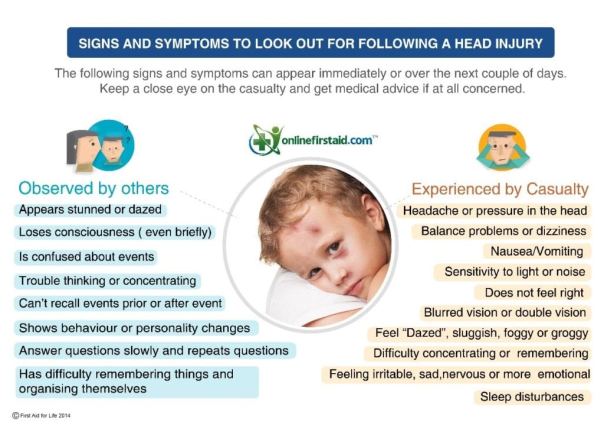
What to look for following a head injury
Call 999 or 112 if a baby or child is injured and they lose consciousness, even momentarily.
Or if they:
- won’t stop crying
- complain of head and neck pain
- are unable to walk normally
If the child has not lost consciousness, is alert and behaving normally after the head injury:
- Reassure the child and remain calm.
- Control any bleeding with direct pressure using a clean, non-fluffy cloth.
- Apply a wrapped ice pack or instant cold pack to the injured area for 10 minutes (this will reduce bruising but has no effect on the severity of any internal head injury).
- Observe the child carefully for the next 24 hours. If you notice any worrying signs (see below), get medical help immediately.
- If the incident has occurred close to bedtime or naptime and your child falls asleep soon afterwards, check in continually to look for anything unusual.
If a child becomes unresponsive after a head injury, it’s vital to know how to place them safely in the recovery position.
Worrying signs
- Twitching limbs
- Disturbances in colour
- Disturbance of breathing.
It’s fine for your child to go to sleep, however do not confuse falling asleep with losing consciousness!
Find more information about our practical courses here. Or take an online course. Onlinefirstaid.com provides this information for guidance and it is not in any way a substitute for medical advice. Onlinefirstaid.com is not responsible or liable for any diagnosis made, or actions taken based on this information.
About us
First Aid for Life provide award-winning first aid training tailored to your needs. Please visit our site and learn more about our practical and online courses. It is vital to keep your skills current and refreshed. We are currently providing essential training for individuals and groups across the UK. In addition, we have a great range of online courses. These are ideal as refreshers for regulated qualifications or as Appointed Person qualifications.
You can attend a fully regulated Practical or Online First Aid course to understand what to do in a medical emergency. Please visit https://firstaidforlife.org.uk or call 0208 675 4036 for more information about our courses.
First Aid for Life is a multi-award-winning, fully regulated first aid training provider. Our trainers are highly experienced medical, health and emergency services professionals who will tailor the training to your needs. Courses for groups or individuals at our venue or yours.
First Aid for life provides this information for guidance and it is not in any way a substitute for medical advice. We are not responsible or liable for any diagnosis made, or actions taken on this information.


0 Comments