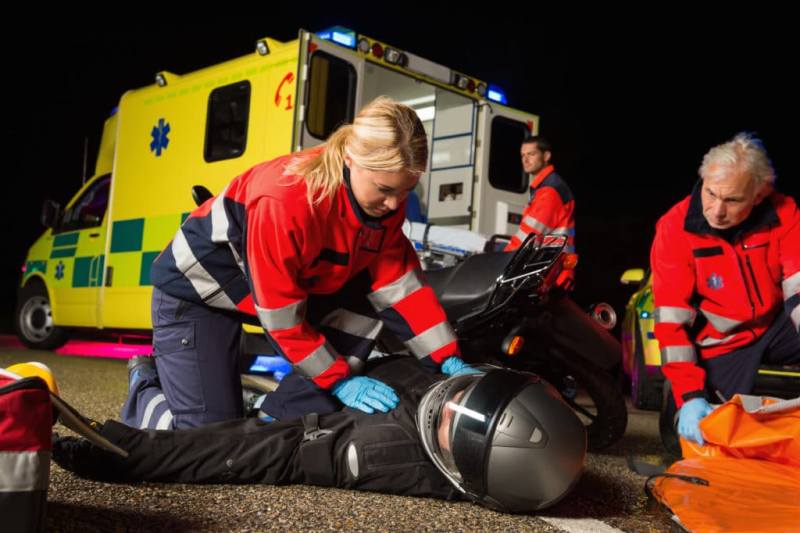
Keeping safe at the scene of an accident
The Highway Code contains vital advice concerning the giving of first aid at the scene of an accident – keeping safe at the scene is vital. Where and how should you stop if you want to help safely? Here is some helpful guidance to help you stop safely in the event of a road traffic accident.
Is it safe to stop?
The first and most important decision is whether it is safe and appropriate to stop and help at the scene of the accident. It may be that it is not safe for you stop and you are better to drive past, but alert the emergency services, letting them know the exact location of the incident and as much information as you can about what you saw.
Where is best to stop?
If it is safe for you to stop, the next decision is how and where; in order to ensure your safety and protect the scene of the accident.
Risk assessment – keep yourself safe at the scene!
If you have stopped at an incident it is vital that you continually conduct a dynamic risk assessment. This means that you assess and continually re-assess the situation to ensure your safety and the safety of any others involved with the collision. This is particularly important on major roads as everyone is in an extremely vulnerable position and it is critical to remain vigilant.
Consider the position of your vehicle
Positioning depends on the location and road speed limit. It will also depend as to whether the accident is on a minor or major road, whether it is easily visible and who and what is involved.
Allow access
It is critically important that your vehicle does not obstruct the emergency services in any way and does not add to the hazards already on the road.
Position your vehicle to protect
The placing of your vehicle if you approach from behind the accident can be extremely beneficial in protecting the accident scene and casualties, should another vehicle not realise there has been a collision.
Use your hazard lights
If you are in a car, on a main road, you should ideally park in a ‘fend off’ position at least 50 yards prior to any incident with the steering wheel turned so if your vehicle is hit it will steer away from you and your incident, not towards it. Therefore, should someone fail to realise there is an obstruction in the road, your vehicle would act as a crash barrier and prevent the other vehicle from ploughing into the accident scene and rescue workers.
Not on a bend
If on a country lane, it may be better to drive back to the nearest ‘straight’ rather than park your vehicle on a bend etc (even if this means a long walk). Put your headlights, fog lights and hazard lights on to give the best warning possible to approaching vehicles.
Remain visible
Be seen, preferable by wearing a reflective high visibility jacket. Put your handbrake on and all lights and hazard lights. In some European Countries the law requires you to carry a warning triangle. If you breakdown on a carriageway you should put a warning triangle on the road at least 45 metres (147 feet) behind your stationery vehicle on the same side of the road. Always take great care when placing or retrieving them, but never use them on motorways.
You may also want to print our free ‘When to call an ambulance’ poster to keep quick-reference guidance in your car, workplace or community venue.
HGV Drivers
If you are driving an HGV, you should leave sufficient space between yourself and the scene of the collision. Ensure there is still space for the emergency services to access the scene. If possible, park at a suitable angle to protect the crash scene. If you are carrying hazardous contents do not put anyone at risk.
Exiting your vehicle
On a major road, get out of your vehicle on the near side of the vehicle. Be extremely careful of warning signs that could indicate a steep drop or danger from the side of the road. Never climb over crash barriers if you are unable to see what is on the other side.
Call the emergency services
Call the emergency services giving the following information.
- location – landmarks, marker posts, GPS…
- phone number you are calling from
- incident – what can you see, how many vehicles involved…?
- number of casualties, are you with them now?
- other services required fire etc
- extent of injuries (state of casualties i.e breathing and injuries)
- approximate ages of any casualties
- repeat location.
Read our article on how to get help wherever you are: https://onlinefirstaid.com/how-to-call-for-help/ Read our article on what to do if you are waiting for an ambulance: https://onlinefirstaid.com/waiting-for-an-ambulance/ Learn more about how to help at the scene of an accident & how to stay safe at the scene.
Be prepared
The World Health Organisation state that the quality of this roadside assistance is strongly dependent on the individuals having received adequate training in first aid. Prompt and appropriate first aid saves lives. Therefore, it is vital to learn first aid to be able to save lives. We offer numerous high-quality award-winning courses either at our designated training room, in your workplace or home. See out list of scheduled dates here: https://firstaidforlife.org.uk/scheduled-dates/ or we can come and run a bespoke, group course at a time and place to suit you. First Aid for Life provides this information for guidance and it is not in any way a substitute for medical advice. First Aid for Life is not responsible or liable for any diagnosis made, or actions taken based on this information. It is strongly advised that you attend a First Aid course to understand what to do in a medical emergency.
About us
Written by Emma Hammett
Online First Aid and First Aid for Life provides award-winning first aid training tailored to your needs – Please visit our site and learn more about our practical and online courses. It is vital to keep your skills current and refreshed.
We strongly advise that you attend a fully regulated Practical or Online First Aid course to understand what to do in a medical emergency. Please visit https://firstaidforlife.org.uk or call 0208 675 4036 for more information about our courses.
First Aid for Life is a multi-award-winning, fully regulated first aid training provider. Our trainers are highly experienced medical, health and emergency services professionals who will tailor the training to your needs. Courses for groups or individuals at our venue or yours.
Online First Aid provides this information for guidance only. It is not in any way a substitute for medical advice. First Aid for Life is not responsible or liable for any diagnosis made, or actions taken based on this information.


0 Comments