
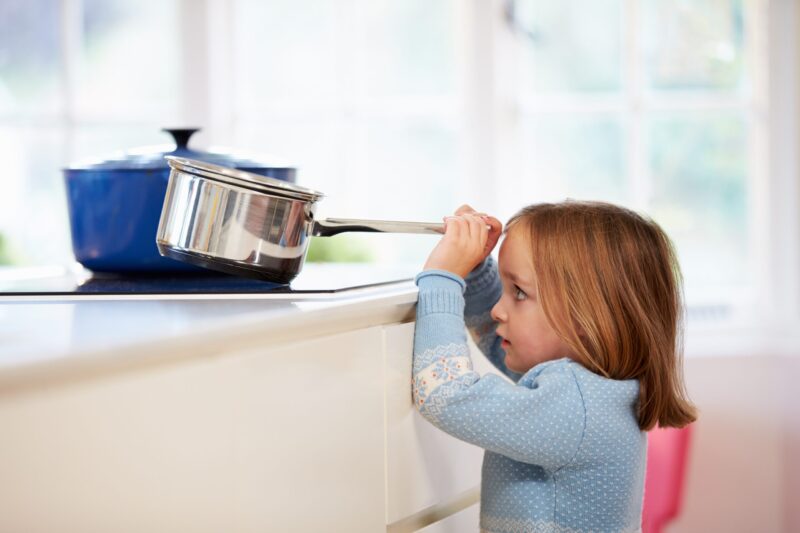
Burns can occur suddenly and the resulting pain and damage caused can be devastating. Knowing what to do if this should happen can make a massive difference in reducing the amount of pain and scarring experienced and may avoid someone having tissue damage.
Burns are particularly serious for small children and babies. Every week, more than 500 children under five are taken to hospital due to of burns and scalds, the majority of these burns are due to hot drinks. Crawlers and toddlers are most at risk. Even 15 minutes after being made a hot drink remains hot enough to scald a baby or young child. Unlike adults, children don’t yet have the reflex to move away from something hot. Their skin is up to 15 times thinner than that of an adult, consequently offering less protection. The damage tends to be more severe and because they have a smaller body surface area and so the burn covers a larger proportion of the body.
The greater the area covered, the more serious the injury and impact for the child. Burns are frightening and the pain and damage caused can be devastating. However, knowing what to do immediately someone is burnt can drastically reduce the pain and scarring and can often lead to a full recovery without even needing to be admitted. The physical and psychological damage from a serious childhood burn can last well into adulthood.
Prevention
Bathroom safety
Always use a bath thermometer and check the water carefully before you let your little one get in. Always run cold water first and then the hot water, ensuring the bottom of the bath is not overheated. Never leave a running bath unattended. Ideally have a bath tap/shower attachment with a thermostat installed to prevent the temperature changing if someone else in the house uses a tap. Bleach and cleaning chemicals are very strong alkali that can burn quickly; always keep them safely out of reach. A heated towel rail is the perfect height for a child to grasp and hot enough to remove their skin. Turn them off if your children are little.
Kitchen safety
Always use the rear hob on your cooker and turn pan handles away from the edge. Fix sturdy cupboard door locks where you store cleaning chemicals and dishwasher tablets (these are extremely corrosive and can cause serious damage). Use a kettle with a short or curly flex and keep it very clear of little hands. Keep chairs and stools at the other end of the room so that children are not tempted to climb to otherwise out of reach areas. When microwaving food or milk, thoroughly mix it before giving it to your child as microwave heating results in hot spots which can burn.
Other dangers
Hot drinks are an obvious cause. Always think carefully before putting your hot drink down and ensure that your little one is unable to reach it. Never breastfeed while drinking a cup of tea or pass hot drinks over people’s heads. Button batteries can burn through the child’s oesophagus if swallowed. Check that they are securely screwed into their toys and be careful of batteries contained within greetings cards. Curling tongs, hair straighteners and irons remain incredibly hot for a long time after they have been unplugged. Always keep them and their flex well out of reach. Radiators should be encased in a radiator cover. Outdoors keep children away from barbeques (even when you’ve finished using them) and be particularly vigilant around bonfires and fireworks.
What to Do
- Extremely carefully remove loose clothing covering the burn immediately. DO NOT TAKE CLOTHES OFF IF THERE IS ANY RISK THAT THE SKIN HAS STUCK TO THEM OR IF THE SKIN HAS BLISTERED.
- Put the affected area under cool running water for at least 20 minutes (ideally longer). Remember you are cooling the burn and not the casualty.
- Keep the casualty warm and dry and watch for any signs of shock.
- Phone an ambulance, particularly if a large area is affected, or if the skin is broken or blistered. Keep the area under cool running water whilst you are waiting for the ambulance to arrive.
A burn is measured using the size of your hand (which is roughly 1% of your body). This means a burn measuring just the size of a 50p piece or a postage stamp can be very serious for a baby or small child. Burns to the hands, face, feet, genitals, airways or a burn that extends all the way around a limb, are particularly serious. Keep the burnt area under cool running water until the paramedic arrives.
Never
- Remove anything that has stuck to a burn
- Touch a burn
- Burst blisters
- Apply any creams, lotions or fats
- Apply tight dressings, tapes or use anything fluffy
Always get burns assessed by a medical professional.
Dressing a burn
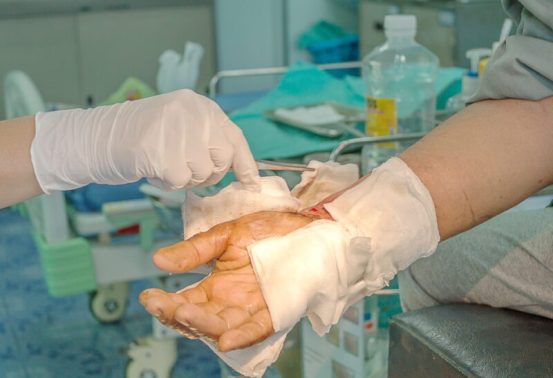
You should never dress a burn until it has been cooled for at least 20 minutes. Covering a burn reduces the risk of infection and reduces pain by covering exposed nerve endings. If a child is burnt and the burn is bad enough that you need to dress it, phone an ambulance and continue to cool the burn under running water. The paramedics will assess and dress it. Cling film is a good temporary dressing. Ensure the burn is thoroughly cooled before dressing it. Discard the first couple of turns of cling film and place an inner piece loosely over the burn. Plastic bags and sterile non-fluffy dressings also make useful dressings.

Online First Aid provides this information for guidance and it is not in any way a substitute for medical advice. The author does not accept any liability or responsibility for any inaccuracies or for any mistreatment or misdiagnosis of anyone, however caused. It is strongly advised that you attend a practical first aid course or take an online course to understand what to do in a medical emergency.


0 Comments