
“Substance abuse (or misuse) refers to the harmful or hazardous use of psychoactive substances, including alcohol and illicit drugs” – WHO definition.
Unfortunately, many people try to escape stress or unhappiness by turning to and misusing substances such as drugs and alcohol. This can swiftly descend into a downward spiral of interdependence and makes any underlying mental health problems far harder to treat.
Sometimes it is drug or alcohol dependence that leads to mental health disorders. We know there are strong links between the use of various drugs and mental health disorders and often alcohol abuse leads to depression and vice versa. Alcohol and other drugs actually affect the chemistry in the brain and can exacerbate mental health disorders.
When someone has drug or alcohol dependence combined with a mental health disorder, this means they have a dual diagnosis which can lead to more serious mental health problems.
Drugs can be divided into 4 main categories:
Stimulants – e.g., cocaine, ecstasy etc
Opiates – e.g., heroin, codeine etc
Depressants – e.g., alcohol, cannabis etc
Hallucinogens – e.g., LSD, magic mushrooms etc
Alcohol misuse
Alcohol misuse is defined as regularly drinking more than the ‘lower-risk limits’ of alcohol consumption as recommended by the NHS.
Regularly drinking more than 14 units of alcohol a week.
If you do drink as much as 14 units a week and have difficulty cutting down, it is better to spread this evenly over 3 or more days, rather than to binge-drink it in one or 2 sessions.
Dangers of drinking alcohol whilst taking prescribed medications:
Alcohol can reduce the effectiveness of some medications and may intensify possible side effects. Always read the leaflet with the medication before taking it and adhere to any advised precautions, such as avoiding alcohol.
Drugs and alcohol and how they affect your mental health
Both tend to affect the way you perceive things. They alter your behaviour, mental and physical health, both in the short term – when experiencing the highs and lows and in the longer term. These effects differ from person to person and can also fluctuate for an individual depending on who they are with, how much they have eaten, whether they are dehydrated, their mood and many other moderating factors.
Short term effects include:
- Reduction or removal of inhibitions
- Violent, abusive or provocative behaviour
- Impaired judgement
- Anxiety, paranoia and depression – including suicidal thoughts
- Confusion, memory problems
- Altered perception of reality
Alcohol and drug consumption can make the treatment of common physical first aid emergencies more difficult:
Alcohol and drug ingestion can make it harder to help in a physical first aid emergency. Often someone who is drunk or high is less compliant and may even be confrontational and violent. This can make it extremely difficult to help them.
If someone has hit their head, it is more difficult to assess the extent of any injury.
When someone has consumed large amounts of alcohol, it affects their ability to maintain their body heat. Consequently, they may end up experiencing hypothermia. Hypothermia affects the stability of your heart and makes you more prone to a heart attack, it also affects the ability for your blood to clot and so bleeding is more difficult to control.
Helping someone you think has problems with drug or alcohol misuse:

Do not try and have a meaningful conversation with them whilst they are seriously under the influence of drugs or alcohol. They may not remember your conversation, or it could promote an unwelcome reaction.
If they are under the influence, it is their physical well-being that is the priority:
Ensure they are safe:
- If they are unconscious or losing consciousness – put them into the recovery position to keep their airway clear.
- Keep them warm if they are outside, or in a cold environment and have drunk too much
- If they have taken drugs and appear to be over-heating, try and encourage them to drink regular sips of water.
- If they are having trouble breathing or expressing suicidal thoughts – call the emergency services.
We have all seen tricky situations happen or been involved in confrontational situations ourselves, where someone looks like they need help, but we are frightened to get involved because of the aggressive or strange way the person is behaving. This may be caused by the abuse of drugs and alcohol.
Common causes of threatening or confrontational behaviour
The person may be behaving strangely for many reasons: they could be angry, high on drugs and alcohol, or suffering from side effects of prescription medication.
In older people, infections are often the underlying cause of confusion. It is therefore important that these possibilities are investigated if someone rapidly becomes confused and disorientated.
They could also be suffering from brain trauma, have had a stroke, be confused (possibly due to any number of reasons), mentally ill, be having a life crisis.
It is also possible you have misunderstood the context of the situation and don’t have all the information about it. Perhaps all is not as it seems.
Whatever the cause of confrontational or worrying behaviour, if you feel uncomfortable, stay well back and contact the emergency services and give them all the information you have.
The most important advice is never put yourself at risk and always trust your instincts.
First aid for someone who has collapsed from excess alcohol
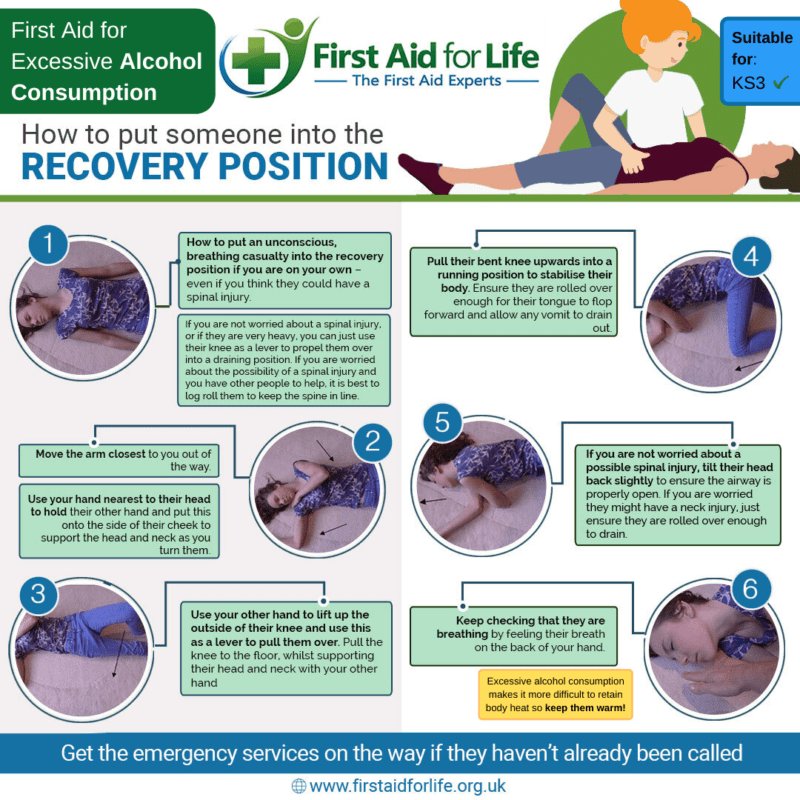
Please email emma@firstaidforlife.org.uk for a copy of this poster
Ensure you have the skills to look after someone who has collapsed following too much alcohol. It is absolutely vital that if someone is unconscious and unable to maintain their own airway, that you put them into the recovery position. In addition, someone should stay with them to ensure they do not asphyxiate on their tongue or vomit.
When someone has consumed so much alcohol that they have collapsed, immediately check that they are breathing and then roll them into the recovery position. This should help to ensure their airway remains clear.
If someone is drunk, it becomes harder for them to maintain their body temperature and they can quickly succumb to hypothermia. If they are outside, bring them in. Alternatively, if you are unable to move them, insulate them from the ground and cover them with a coat or blanket.
Keep checking they are breathing and that their airway remains clear, especially if they are vomiting.
The effects of alcohol can also make it harder to assess serious signs and symptoms.
When someone who is drunk bumps their head, a medical professional should always check them. Someone should monitor anyone with a serious head injury for the next 48 hours to check for any signs of brain injury. This is even more important if they have been drinking or have taken any other substances.
Mental Health First Aid for drug and alcohol misuse using CARES
Check for immediate life-threatening emergency. Calmly approach, reassure, assess & assist.
Actively listen without judgment
Recommend sources of immediate help – be particularly aware of signs of crisis
Encourage to seek professional help
Suggest possible self-help and other support options for better mental health
Having established that there is no immediate life-threatening emergency:
Calmly approach them and reassuringly try to help.
Choose a quiet room, where you won’t be interrupted, where they will feel relaxed and more able to open up.
Respect their right not to want to discuss things. It could be because they are not ready to talk, it could be because they do not see you as the most appropriate person to open up to, or maybe they don’t realise there is a problem, or possibly there has been a miscommunication and you have misread signs.
Actively listen without judgment
Try not to make assumptions, be patient and non-judgemental.
Think about your body language, where you are sitting and how you can make them feel most at ease and maintain eye contact.
Try to establish the nature of the problem and what they are taking or have taken. This information will be extremely helpful to the emergency services if they were to require emergency first aid.
Recommend sources of immediate help – be particularly aware of signs of crisis
The very first step is to acknowledge that there is a problem. Then talking to friends and family may be the next course of action.
Encourage them to seek professional help.
Visiting their GP is usually the best initial healthcare professional.
GPs will be able to further signpost them to additional NHS drug and alcohol treatment services such as cognitive and behavioural therapy, detox and medication.
Suggest possible self-help and other support options for better mental health
About us
We run practical and online first aid courses and have specific training for teenagers that include first aid at parties and how to help if a friend has drunk too much.
Award-winning first aid training tailored to your needs – Please visit our site and learn more about our practical and online courses. It is vital to keep your skills current and refreshed.
We strongly advise that you attend a fully regulated Practical or Online First Aid course to understand what to do in a medical emergency. Please visit https://firstaidforlife.org.uk or call 0208 675 4036 for more information about our courses.
First Aid for Life is a multi-award-winning, fully regulated first aid training provider. Our trainers are highly experienced medical, health and emergency services professionals who will tailor the training to your needs. Courses for groups or individuals at our venue or yours.
First Aid for life provides this information for guidance and it is not in any way a substitute for medical advice. First Aid for Life is not responsible or liable for any diagnosis made, or actions taken based on this information.



0 Comments