

Christmas can be a particularly tough time of year for asthmatics; cold weather, viruses and stress are all asthma triggers so it is important to be aware of symptoms and deal with them promptly. As always, it is vital to carry a reliever inhaler and emergency numbers with you. Ensure you’ve got enough medicine to last the festive period. Alerting friends and family of your triggers before visiting can help them make necessary changes to their homes in advance. Continue using preventer inhalers as prescribed. Prevention is obviously favourable during a time when you’re meant to be enjoying yourself!
Asthma is an extremely common chronic and potentially life-threatening condition that affects nearly 10% of children. On average, there are two children in every classroom in the UK with asthma and over 25,000 emergency hospital admissions for asthma amongst children in the UK every year and many more when you include adult asthmatics too.
When someone has asthma their airways go into spasm which causes tightness of the chest. The linings of the airways become inflamed and produce phlegm leading to severe difficulty in breathing. Approximately 20 children of school age in England and Wales die every year from asthma and most deaths occur before the child reaches hospital. Schools are now permitted to have a spare inhaler available for emergencies.
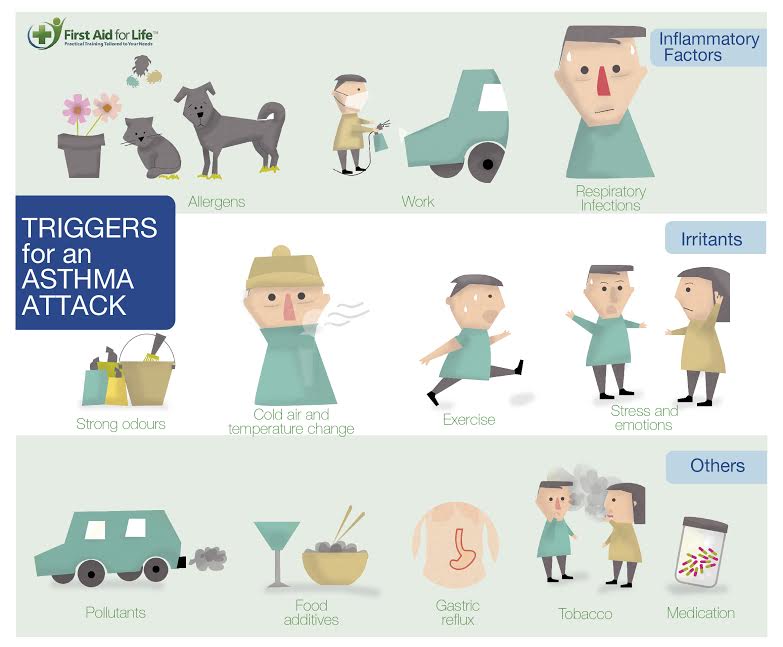
Triggers
There are many different triggers for asthma attacks and many asthmatics are well aware of their trigger points, although they may not always be able to avoid them.
If there is a family history of asthma, eczema or allergies there is a higher incidence of someone developing asthma. Smoking during pregnancy has been shown to significantly increase the risk of a child developing asthma and children whose parents smoke are more likely to become asthmatic.
Exercise can trigger attacks in some children, but children should not avoid exercise because they are asthmatic. The should however always have their reliever inhaler with them when they do exercise.
Symptoms
- Coughing
- Wheezing
- Shortness of breath
- Tightness in the chest
- Difficulty breathing out
- Increase in sticky mucus and phlegm
Not everyone will get all of these symptoms.
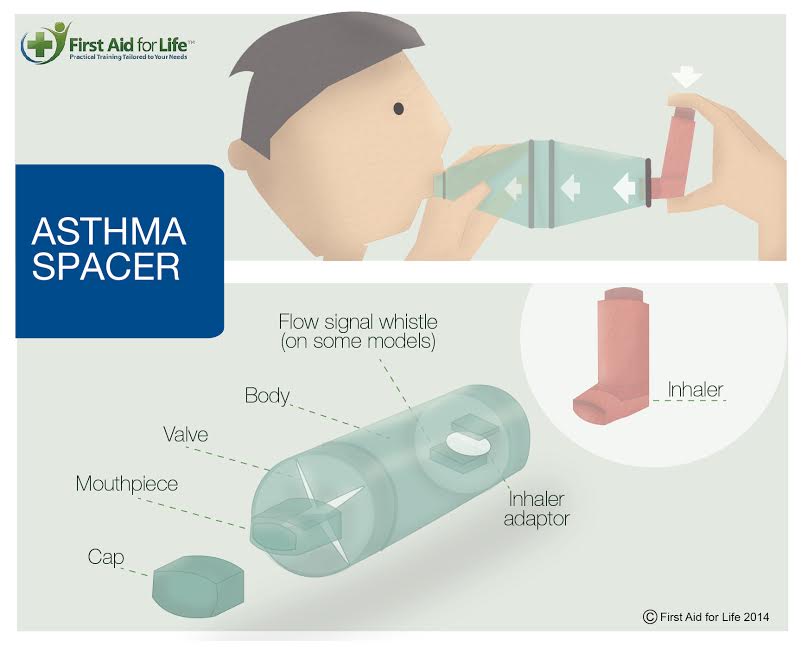
Spacers
Using a spacer device has been shown to deliver the medication much more effectively and increases the amount of medication reaching the airways rather than hitting the back of the throat and this helps people to achieve far better control of their asthma.
Spacers come in a variety of shapes and sizes, but not all spacers fit all types of inhalers – use the spacer prescribed with the inhaler. Spacers for smaller children are usually fitted with a face mask. There is considerable co-ordination required to use an inhaler without a spacer and this can lead to increased stress and worsening of symptoms. Always keep the spacer with the inhaler and have both available at all times.
How to Help in an Asthma Attack
The following guidelines are suitable for both children and adults.

Be calm and reassuring as reducing the stress and keeping the casualty calm really helps them to control their symptoms and panic can increase the severity of an attack. Take one to two puffs of the reliever inhaler, using a spacer device if available.
- Sit them down, loosen any tight clothing and encourage them to take slow, steady breaths.
- If they do not start to feel better, they should take more puffs of their reliever inhaler.
- If they do not start to feel better after taking their inhaler as above, or if you are worried at any time, call 999/112.
- Get them to keep taking the reliever inhaler whilst waiting for the paramedics to arrive.
Do not take them outside for fresh air if it’s cold – cold air makes symptoms worse. Sitting backwards on a chair as in the image above may be helpful.
After an Asthma Attack
Make an appointment with your doctor or asthma nurse for an asthma review within 48 hours of the attack.
People often have a variety of different asthma inhalers and medication to control their asthma – if they are having an asthma attack it is the reliever inhaler that they need. Reliever inhalers are usually blue.
It is strongly advised that you attend a first aid course to understand what to do in a medical emergency. First Aid for Life run specific courses covering in detail how to help someone having an asthma attack.
Find more information about our courses here. First Aid for Life provides this information for guidance and it is not in any way a substitute for medical advice. First Aid for Life is not responsible or liable for any diagnosis made, or actions taken based on this information. Information on asthma during the festive period based on Asthma UK’s most recent report.


0 Comments