
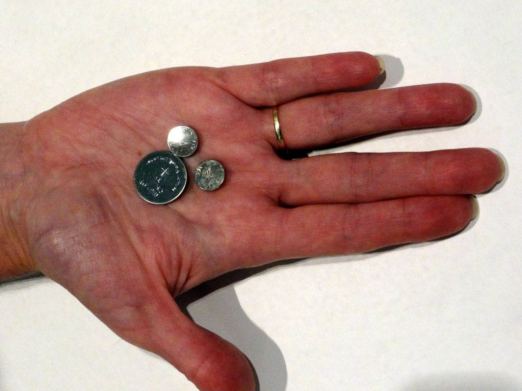
Button batteries and lithium coin batteries are the small, round batteries you find in toys, cards, watches, key fobs, calculators, hearing aids and lots of other everyday objects. They appear to be pretty harmless and you would think that if they were swallowed, they’d pass straight through and out the other end.
Sometimes button batteries do pass through the body without a problem. However, if a button battery, particularly a lithium coin battery, gets stuck in someone’s oesophagus, the energy emitted from it creates corrosive caustic soda. This burns through the tissues, causing horrendous damage and internal bleeding.
Hospitals are reporting an increase in life-changing injuries resulting from accidentally swallowing button batteries.
Lithium coin batteries are particularly dangerous as they can burn through tissues and often blood vessels within hours. In most cases, parents have no idea their child has swallowed a battery until they start vomiting blood, by which time it’s often too late to help as irreparable damage has already occurred.
Lithium coin batteries have a higher voltage and therefore release more energy and are more corrosive; fatal damage can therefore occur in just a couple of hours.
Watch out – swallowing batteries is not the only problem, children can also do themselves lasting damage by putting batteries up their noses or ears as well.
To watch a button battery burn through flesh click here.
Prevention
Prevention and vigilance is key.
- Always check battery compartments are securely fastened.
- If a battery is missing and you think it likely your child may have swallowed it, take your child to A&E for an x-ray to be sure.
- If a battery compartment isn’t secured with a screw, ensure the gadget is kept safely out of the reach of children. Avoid buying products that do not conform to EU safety standards.
- Store spare batteries carefully; somewhere inaccessible to children, ideally in a high-up, lockable cupboard. Button batteries are potentially as dangerous as medicines and your cleaning products and should be treated as such.
- Inform your whole family about the dangers of button batteries.
- Recycle used batteries safely, even these can be dangerous.
If you think your child may have swallowed a button battery, act fast:
- Take them to your nearest A&E as quickly as possible.
- Take the gadget with you so the staff can identify the type of battery you are worried about.
- Tell the triage nurse that you think they have swallowed a battery.
- Do not wait for any signs or symptoms.
- Do not try to make them sick.
- Do not give them anything to eat or drink.
Your child will be x-rayed to establish whether the battery is there or not and if so, where it is lodged. If necessary, they will be taken for an operation to remove the battery as a matter of urgency.
Emma’s latest book Burns, Falls and Emergency Calls works alongside this guidance offering accident prevention and child developmental advice for children from 0-adult, giving clear first aid advice and including checklists for homes and childcare settings to make it easier for everyone to stay one step ahead in preventing such accidents. Burns, Falls and Emergency Calls is available from Amazon.
First Aid for Life and onlinefirstaid.com provide this information for guidance and it is not in any way a substitute for medical advice. First Aid for Life is not responsible or liable for any diagnosis made or actions taken based on this information. The best way to be prepared for action in an emergency is to attend a practical first aid course or do one online.




0 Comments