
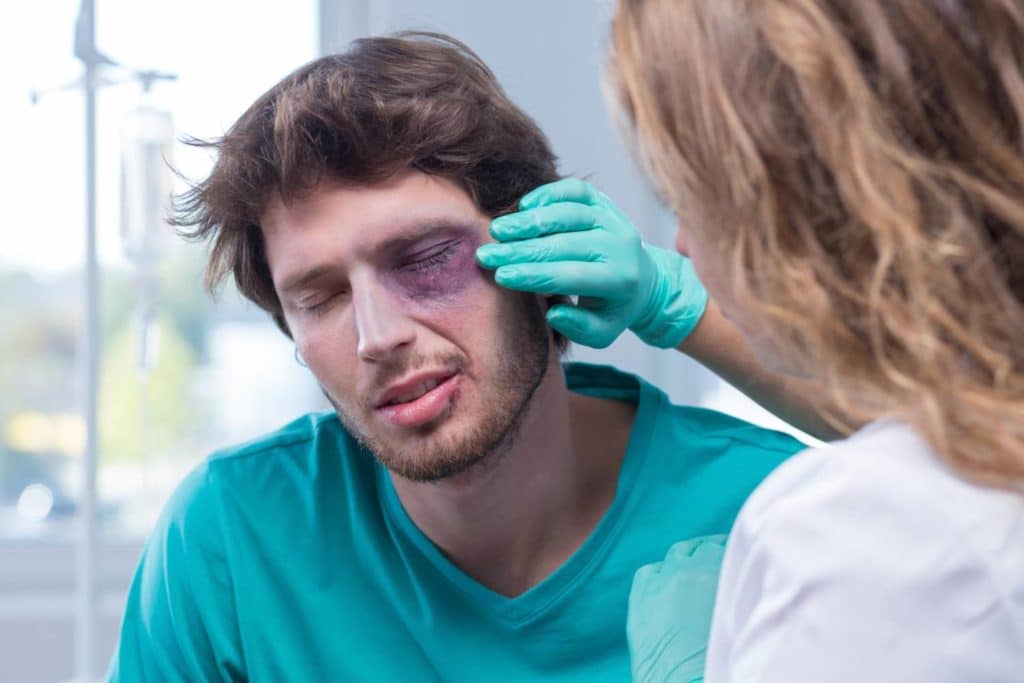
Eye injuries are unpleasant and painful – and can be frightening. Some of the most common injuries are as follows:
- blows to the eye– such as being hit by a fist, elbow or ball or walking into something
- scratches and abrasions– often caused by fingernails or tree branches
- foreign bodies– could be grit, wood, sand or metal getting in the eye
- penetrating or cutting injuries– possibly from glass or projectiles flung from tools, especially when hammering or using power tools or from a collision in a vehicle
- chemical burns– from household cleaning products, workplace chemicals or an acid attack
Serious eye infections can also cause damage and scarring to the eye – so hygiene to prevent eye infections is vital.
How to wash your eye safely at home
Wash your eyes with clean hands and clean water, ideally tepid and not too hot, if there is something in it. Hold your eye open under running water for at least 20 minutes.
Do not try to remove an object if it has pierced you eye
Try to avoid touching or rubbing your eyes, this could cause further irritation
Avoid wearing contact lenses until your eye is fully healed.
Serious eye injuries – when to seek medical attention
If one of these situations has occurred, visit A&E or call 999,
- If your eye has come in contact with a strong chemical like bleach. Keep rinsing your eye with water while waiting
- Blood or pus is coming out of your eye
- You feel very nauseous or are being sick after an eye injury
- If something has it you eye at high speed
- A sharp object has pierced your eye
- There are changes to your sight after an eye injury
- You have a high temperature, headache or sensitivity to light
Minor injuries
If someone has grit or dust in their eye, rinse it out with water. Anyone who has a minor eye irritation or injury, affecting the front of the eye, there is usually no need for medical advice and it should clear up within a day or two.
Major eye injuries
This refers to when a chemical has come in contact with the eye, an eye being cut or pierced or a significant loss or change of vision.
- Immediately call 999 to receive further guidance.
- Gently place a clean eye pad or would dressing on the affected eye
- Do not attempt to remove a large object in the eye.
- Encourage the person to rest with their eye closed.
- In the event of a chemical splash, flush the eye with lots of running water.
Contact lenses
Wearing contact lenses incorrectly can also injure your eyes. Particularly if they’re dirty, don’t fit properly or have been worn for too long. Contact lens wearers should be particularly careful when putting lenses in and removing them.
Cuts to the eyelid
If someone has a cut to their eyelid, do not apply hard pressure. The best thing to do is to get a clean compress and then cover the eye with a small paper cup to prevent bacteria or debris getting into the cut and get medical help.
Chemicals in the eye
If someone gets chemicals in their eye, wash it immediately with cold water or a saline eye wash and transport the person to hospital.
- Wear gloves.
- Rinse the casualty’s eye with cool running water for at least 20 minutes.
- Ensure the run off is away from the casualty so it does not contaminate any other areas
- Cover the affected eye with a non-fluffy pad if necessary.
- Transfer to a hospital ideally with a specialist eye department.
- Take details of the chemicals with you to the hospital.
If the chemicals have made the person sensitive to light, cover their head with a towel before taking them to the hospital.
Black eyes
A black eye is caused by swelling or bruising of the tissue around your eye. The discolouration is caused by broken blood vessels under the skin. As this area is sensitive and the skin around the eye is looser and thinner than other areas, the black eye often looks worse than it is
Black eyes are usually caused by a blow to the eye and/or surrounding area. This could be from a fall, punch or sports related. Did you know that black eyes can also be caused by dental work, surgery or sinus infection.
If the black eye was caused by the blow to the head, check for symptoms of a concussion. Most commonly, throwing up more than 2-3 times, dizziness or appearing dazed or confused, for the full guide on concussions.
When to seek medical attention –
- If there is bleeding inside the eye
- Your pupil becomes irregularly shaped
- If both eyes are bruised after a blow to the head
- Significant vision problems, like double vision, loss of vision, sensitivity to light or seeing flashing lights
 Be ready to give CPR and use a defibrillatorSee the course
About us:
We strongly recommend that you attend a fully regulated Practical or Online First Aid course to understand what to do in a medical emergency. Please visit https://firstaidforlife.org.uk or call 0208 675 4036 for more information about our courses.
First Aid for Life is a multi-award-winning, fully regulated first aid training provider. Our trainers are highly experienced medical, health and emergency services professionals who will tailor the training to your needs. Courses for groups or individuals at our venue or yours.
First Aid for Life provides this information for guidance and it is not in any way a substitute for medical advice. First Aid for Life is not responsible or liable for any diagnosis made, or actions taken based on this information. It is strongly advised that you attend a First Aid course to understand what to do in a medical emergency.



0 Comments