
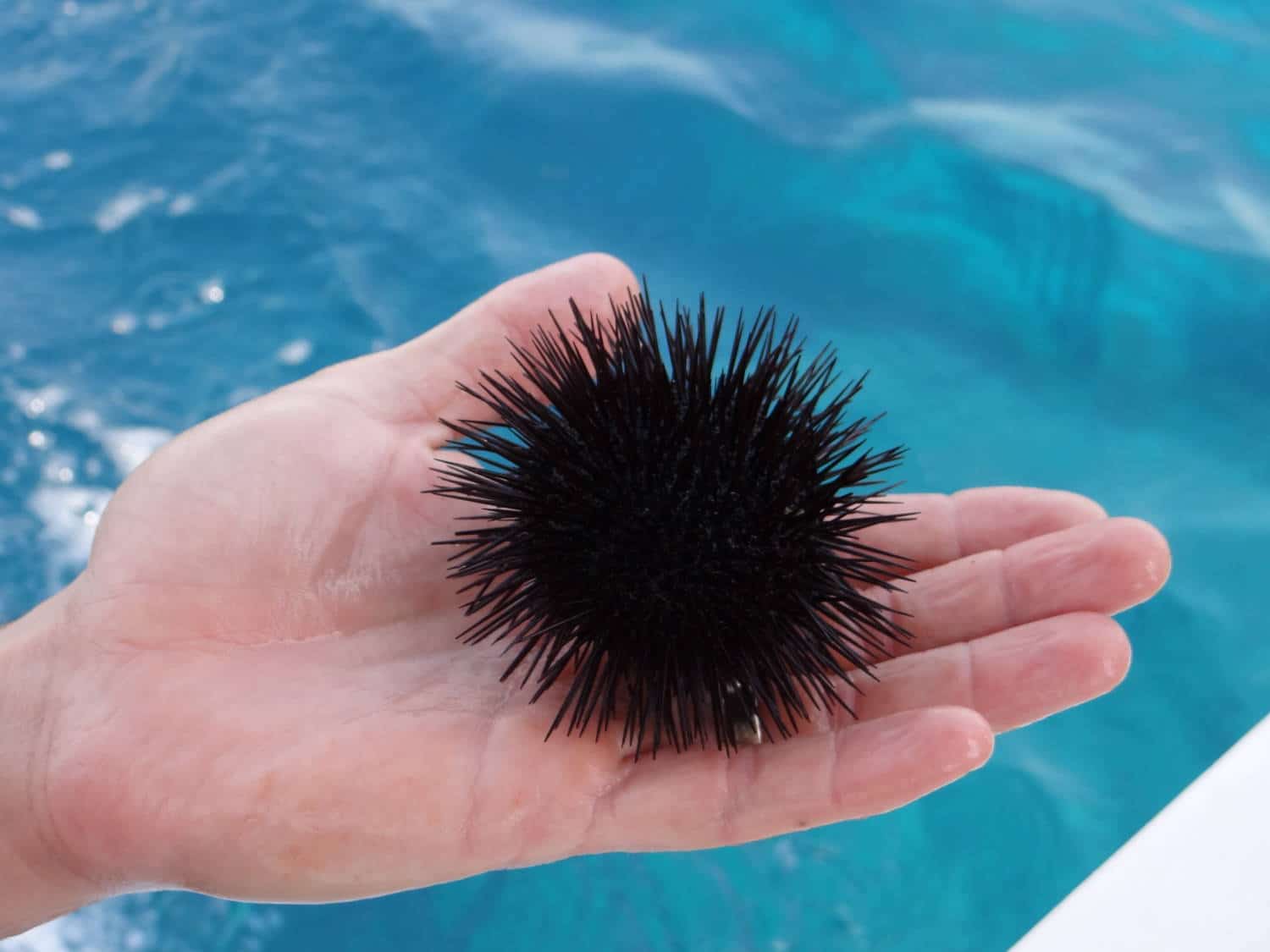
Sea urchins and jellyfish don’t look dangerous, but both can deliver painful stings if you accidentally tread on them. Sea urchin spines can snap and become embedded in your skin, while jellyfish tentacles can cause burning and irritation. Knowing what to do straight away will help ease the pain, reduce infection risk, and keep you comfortable until you can seek medical advice if needed.
Embedded spikes, how to help
If a sea urchin spike does become embedded, ideally soak the affected area in vinegar, hot water or saline. Carefully remove the spike with tweezers in the direction it went in. Squeeze the wound to remove any extra bits. Do not be tempted to probe around with a needle as this will make things worse. Some people advise to shave the affected area to remove any additional spines – However, I would caution against this as it will make it far more difficult to remove additional spines as they begin to work themselves out. For any you are unable to remove, seek medical advice and monitor the wounds for signs of infection. It is possible you may need antibiotics if the wound becomes infected.
For common jelly fish stings; vinegar is the best antidote, although some people do swear by the power of urine. Urine is sterile at the point when it is excreted from the body and is uric acid. Vinegar is acetic acid. A mild acid is beneficial to stings!
Jelly fish stings – what to do:
- Reassure the casualty and sit them down
- If there are any tentacles remaining, remove with tweezers – get a medical professional to do this if you are unsure
- If the casualty shows any signs of breathing problems, or acute allergic reaction or anaphylaxis – phone an ambulance immediately. If you’d like to feel more confident recognising and treating these reactions, our anaphylaxis and acute allergic reaction first aid course explains the warning signs and what to do in detail.
- Soak the affected area in vinegar for 15-30 minutes – NOTE – with stings from a Portuguese Man of War (these are not jellyfish but are often mistaken for them) – do not use vinegar (or urine) as it will make the pain worse
If you’re not sure what caused the mark or swelling, our ‘What bit me?’ guide to common bites and stings can help you work out the likely culprit and how serious it might be.
About Us
Award-winning first aid training tailored to your needs. Please visit our site and learn more about our practical and online courses. It is vital to keep your skills current and refreshed.
It is strongly advised that you attend a fully regulated Practical or Online First Aid course to understand what to do in a medical emergency. Please visit firstaidforlife.org.uk or call 020 8675 4036 for more information about our courses.
First Aid for Life is a multi-award-winning, fully regulated first aid training provider. Our trainers are highly experienced medical, health and emergency services professionals who will tailor the training to your needs. Courses for groups or individuals at our venue or yours.
First Aid for life provides this information for guidance and it is not in any way a substitute for medical advice. First Aid for Life is not responsible or liable for any diagnosis made, or actions taken based on this information.



0 Comments