
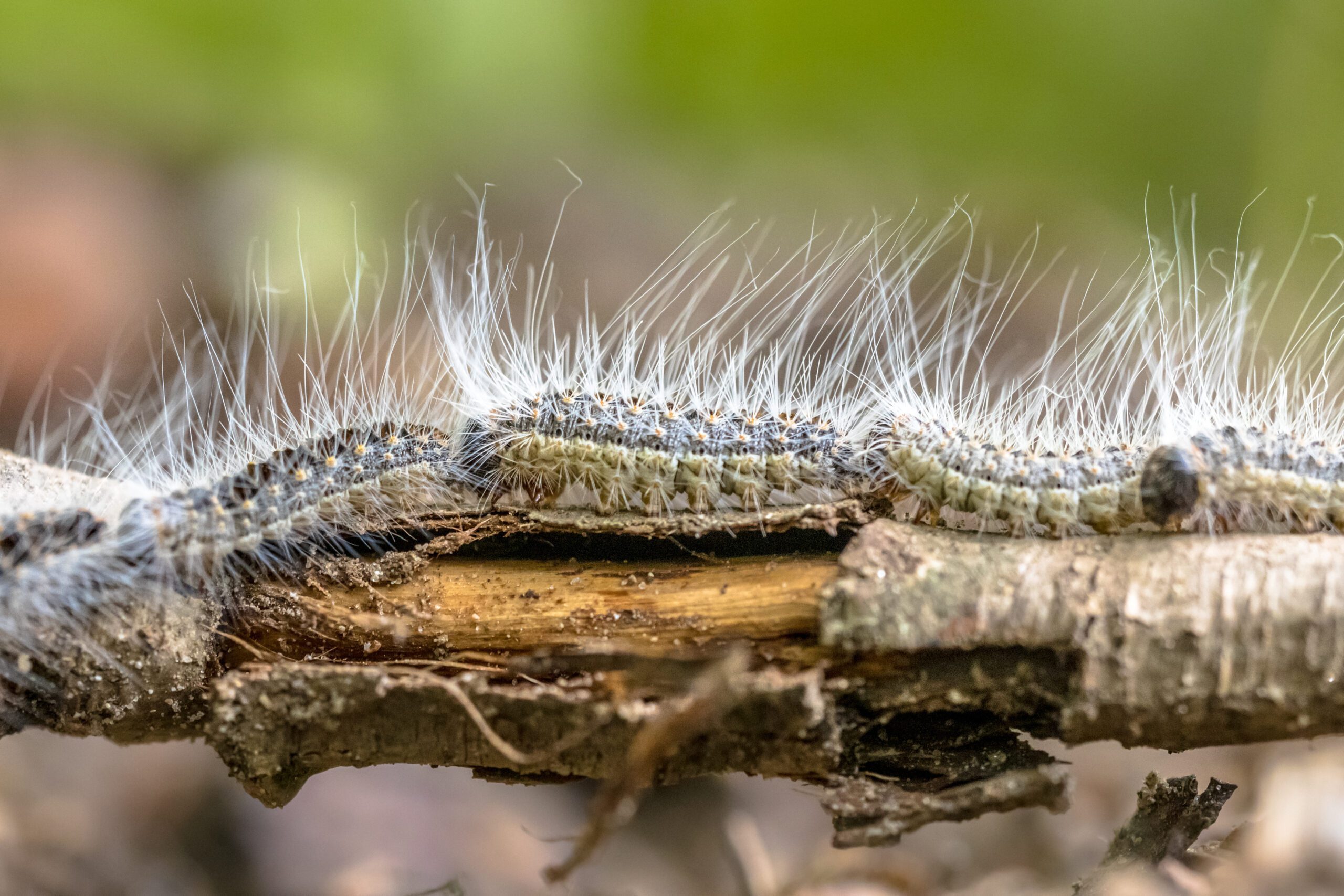
People living in London and the South East are being warned to look out for toxic Oak Processionary Moth (OPM) caterpillars. These caterpillars can cause eye irritation, skin rashes and vomiting, as well as possibly triggering extreme, and possibly fatal, asthma attacks. This article outlines what these catepillars are, how to indetify them and the safety precations to take.
After a recent influx of these caterpillars, several gardeners have reported becoming very unwell, having unknowingly worked near an infestation. The Forestry Commission is warning gardeners and those who walk in woods and forests to keep their eyes peeled for OPM caterpillars and their nests, as they have now been seen all across Greater London, as well as further afield. They were first spotted in London in 2006. Kingston upon Thames and Brent have been badly affected in the past and infestations have also been noted in Bracknell Forest, Slough and Guildford.
Speaking about the outbreak, a spokesman for the Forestry Commission said: “Our trees in London, Surrey and other parts of the South East are under attack from an unlikely source. This means we need to contain the pests’ numbers and spread as much as we can and protect ourselves and our animals.”
How to identify OPM caterpillars:
- They move in a procession, in a ‘nose-to-tail’ fashion
- They often form ‘arrow-headed processions’. This means that there is one leader, with subsequent rows containing several caterpillars abreast
- You can find them in oak trees, and sometimes on the ground under oak trees, in late spring/early summer
- OPM caterpillars have both very long, white hairs and much shorter hairs
Eradication programme:
The OPM caterpillars were first spotted this year in mid-April. Currently there is a programme of treatment being carried out to eradicate the larvae, before they get too big to be killed. In 2018, 600 oak trees were treated to try to contain the problem.
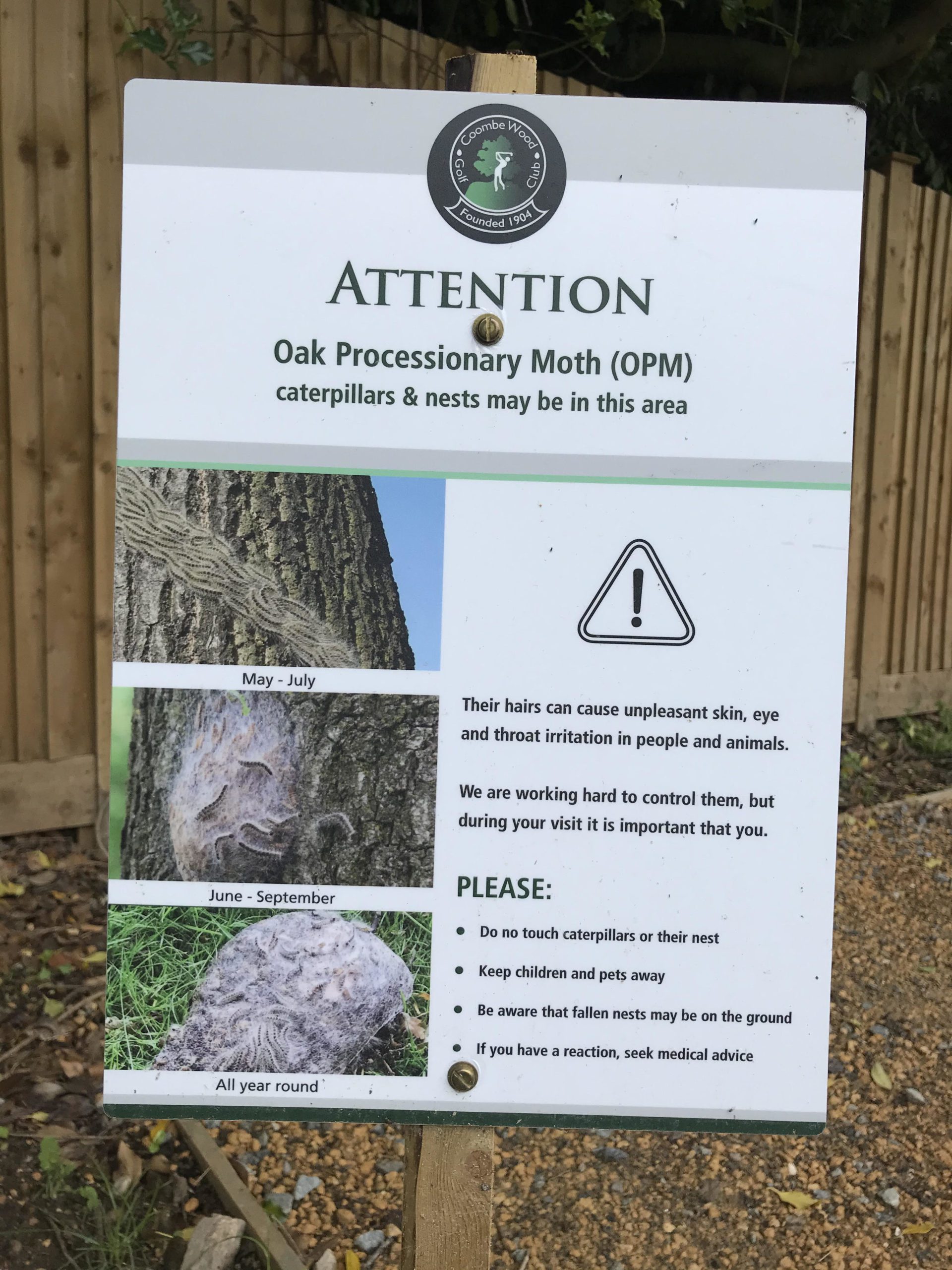
OPM caterpillars have approximately 62,000 hairs. These hair follicles contain protein that can cause serious allergic reactions. The caterpillars shed these hairs, but they can then remain active on the ground for up to five years. The hairs also remain in the oak tree nests. The hairs start out white, but discolour over time, which makes them harder and harder to spot.
Precautions to take:
The Forestry Commission issued the following guidelines on precautions to minimise health risks:
- Do not touch or approach nests or caterpillars
- Don’t let children touch or approach nests or caterpillars
- Do not let animals touch or approach nests or caterpillars; or try removing nests or caterpillars yourself
- Visit a pharmacist if you need relief from a skin or eye irritation following possible OPM contact
- See a GP or consult NHS 111 if you have a serious allergic reaction.
In addition, they are also asking members if the general public to report any sightings of OPM caterpillars on their website at https://www.forestry.gov.uk/treealert
Do continue to enjoy your walks – but remember to keep your eyes peeled!

About us
First Aid for Life provide award-winning first aid training tailored to your needs – Please visit our site and learn more about our practical and online courses. It is vital to keep your skills current and refreshed. We are currently providing essential training for individuals and groups across the UK. In addition, we have a great range of online courses. These are ideal as refreshers for regulated qualifications or as Appointed Person qualifications.
You can attend a fully regulated Practical or Online First Aid course to understand what to do in a medical emergency. Please visit https://firstaidforlife.org.uk or call 0208 675 4036 for more information about our courses.
First Aid for Life is a multi-award-winning, fully regulated first aid training provider. Our trainers are highly experienced medical, health and emergency services professionals. They will tailor the training to your needs. Courses for groups or individuals at our venue or yours.
First Aid for life provides this information for guidance and it is not in any way a substitute for medical advice. First Aid for Life is not responsible or liable for any diagnosis made, or actions taken on this information.


0 Comments