
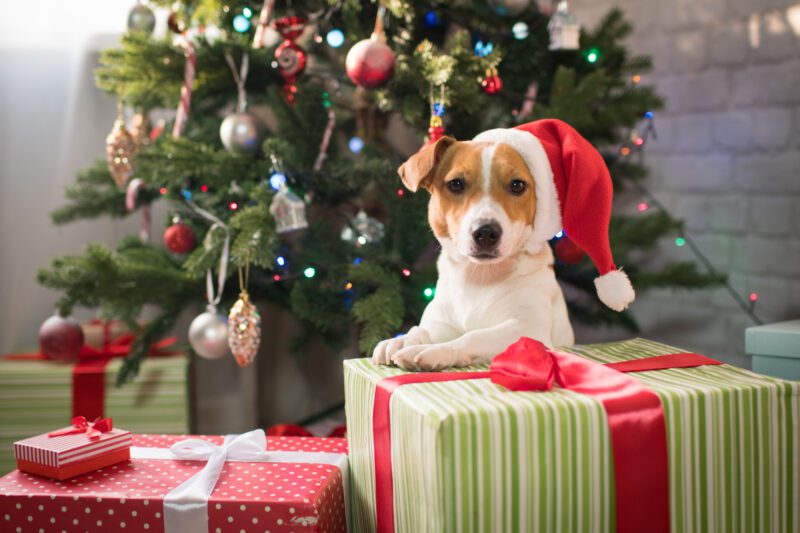
While Christmas is an exciting time of year for the family, it can be both stressful and potentially dangerous for your pet. Follow our top tips to make sure you can have a pet friendly Christmas.
Safety around Christmas decorations
Candles
Candles brighten many homes over Christmas, but excited dogs with wagging tails can easily knock them over, causing a fire risk.
Christmas Trees
Christmas trees create a festive atmosphere but often pose hazards to pets.
- Always anchor your Christmas tree to ensure it can’t topple over and hurt them.
- The water in your tree stand can become stagnant and drinking it could make your pet very ill. Make sure you change it or ensure that your pet can’t get to it.
- Vacuum often to clear up fallen pine needles so your pet can’t eat them. Pine needles can puncture your pet’s intestines if ingested and pine sap is poisonous to cats and dogs.
- Leave lower branches without decorations so your pet can’t play or eat them. Or invest in the new pet-friendly half parasol trees that only have branches on the top half. Not having branches with baubles and bows on the bottom half minimises the danger to your pet.
- Keep chocolate decorations off your tree entirely, as they are toxic to pets.
Decorations
Choose decorations that won’t harm your pet.
- Avoid using tinsel or silver strands, as pets may ingest them, leading to bowel obstructions that require surgery.
- Replace glass ornaments with safer options, as pets might bite them or step on broken shards if they fall.
- Avoid edible decorations such as popcorn garlands, candy sticks, and chocolate ornaments. These not only harm pets but also encourage them to climb or jump to reach the tree.
Fairy Lights
Get a cable guard for your fairy lights as cats, dogs and rabbits might attempt to chew through wires, this might lead them to be electrocuted.
Some pets may find flashing lights on trees distressing and stressful and may want to pull or play with tree decorations.
Lights can cause burns on cats and dogs if your pet becomes entangled in the wire.
Other hazards in the home
Plants
Holly, ivy, poinsettia and mistletoe are all common Christmas plants; however, they are all poisonous and extremely toxic for your pet. Amaryllis and ferns are also toxic to cats and dogs. Never leave them accessible to your pet.
Fires
Open fires and gas fires can burn your pet if they get too close, sparks from an open fire can also cause burns. Use a fireguard to make sure they don’t singe their fur or blister their skin.
Medications – for humans and dogs
Ibuprofen
Sugar-coated Ibuprofen tablets are very appealing to dogs. If you suspect they have eaten them you need to get immediate veterinary help.
Symptoms include vomiting, diarrhoea, bleeding from the gut, stomach ulceration and kidney failure.
Medication for Pets
If your pet takes any medication, make sure you have enough supply to see you through the holiday season when the Surgery may be closed.
Presents – for humans and pets
Presents
The same dangerous bowel obstructions may occur if your pet ingests wrapping paper or ribbons.
When wrapping presents keep your pets out of the way and if you’ve got a very inquisitive pet who might try and eat wrapping on presents then it may be advisable to keep the presents out of sight or somehow ring fence your Christmas tree and your presents, so your pet can’t get to them.
Dispose carefully of any string or ribbon so your pet can’t eat it or get entangled in it.
Silica Gel
Silica gel comes in small sachets and is used to keep moisture out of electrical equipment, clothes, bags or toys. It is small and easily missed so be aware to look out for it. It is toxic to humans and pets.
Pet presents
Rather than feeding pets potentially harmful or unhealthy foods, give them gifts of new toys, collars or extra attention instead.
Pets should be given pet toys – children’s toys will not adhere to pet safety standards and could prove hazardous. Click here for advice on help to help your choking pet
Limiting your pet’s stress
Festive stress
The change in routine can worry pets.
To reduce their festive stress, try to maintain their routines for food, exercise, bed and toilet breaks. Consistency can increase a pet’s sense of security.
Offer a cosy retreat, away from the noise and excitement (and children), so your pet can have some peace and quiet. Leave toys there to create positive associations with the retreat.
Guests
Houses full of people, with extra visitors and excited children, can be extremely stressful for your pet.
Children can be overpowering, desperately wanting to stroke and pester them.
The additional stress of unfamiliar noises and overstimulation can cause them to snap. Be very sensitive as to when your pet needs a break. Remind guests not to feed your pets any scraps.
Travel
If you’re going away over Christmas, make sure you don’t leave your pet alone for too long. If they are travelling with you, take something familiar with them to help them settle into your guest accommodation.
Check out our blog on safe pet travel here: https://firstaidforpets.net/pet-travel/
Walkies
Make sure your dog enjoys long walks to ensure they are tired to stop any bored or disruptive behaviour. The same applies to humans too!
Other important information
Turkey bones
Don’t let your pet eat turkey or chicken bones, they can splinter and rupture their gut.
Vets
Have the contact details of the emergency vet ready in case of accidents or if your pet eats something they shouldn’t.
For more information on helping your pet if they are poisoned, please click here to download our ebook.
Written by Emma Hammett of First Aid for Pets
Practical and online dog first aid courses tailored to your needs
First Aid for Pets provides this information for guidance and it is not in any way a substitute for veterinary advice. The author does not accept any liability or responsibility for any inaccuracies or for any mistreatment or misdiagnosis of any person or animal, however caused. It is strongly advised that you attend a practical First Aid for Pets course to understand what to do in a medical emergency.


0 Comments