
6 vital first aid skills all parents should have
I am frequently asked what are the most common medical emergencies that can occur in families? To me there are 6 vital first aid skills that all parents should have to ensure that they are able to cope with the most life-threatening emergencies.
I believe all parents should know how to calmly help if someone in their family chokes, stops breathing, has a seizure, head injury, is burnt or is bleeding. These topics form the basis of even my shortest emergency first aid courses and consequently I would like to introduce you to these vital skills to ensure you would know the rudiments as to know what to do if someone in your family needs your help.
Choking – how to help an adult, baby or child
Choking is extremely common and very frightening, but in most cases, with the right help, the casualty will make a full recovery.
When someone is choking it is really frightening. If they are coughing and spluttering, it is best to see if they can cough the obstruction up themselves. If the person is red in the face, struggling to breath and unable to make a sound – their airway is completely blocked, and they need urgent help, fast!
Adult
If someone is choking and are unable to cough:
- Bend them forward supporting them on their chest with the other hand and use the flat of your hand to give a sharp back blowbetween the shoulder blades.
- Check to see if the blockage has cleared before giving another blow.
- If the blockage hasn’t cleared after five blows, try abdominal thrusts/Heimlich manoeuvre:
If the back blows haven’t worked; get an ambulance on the way
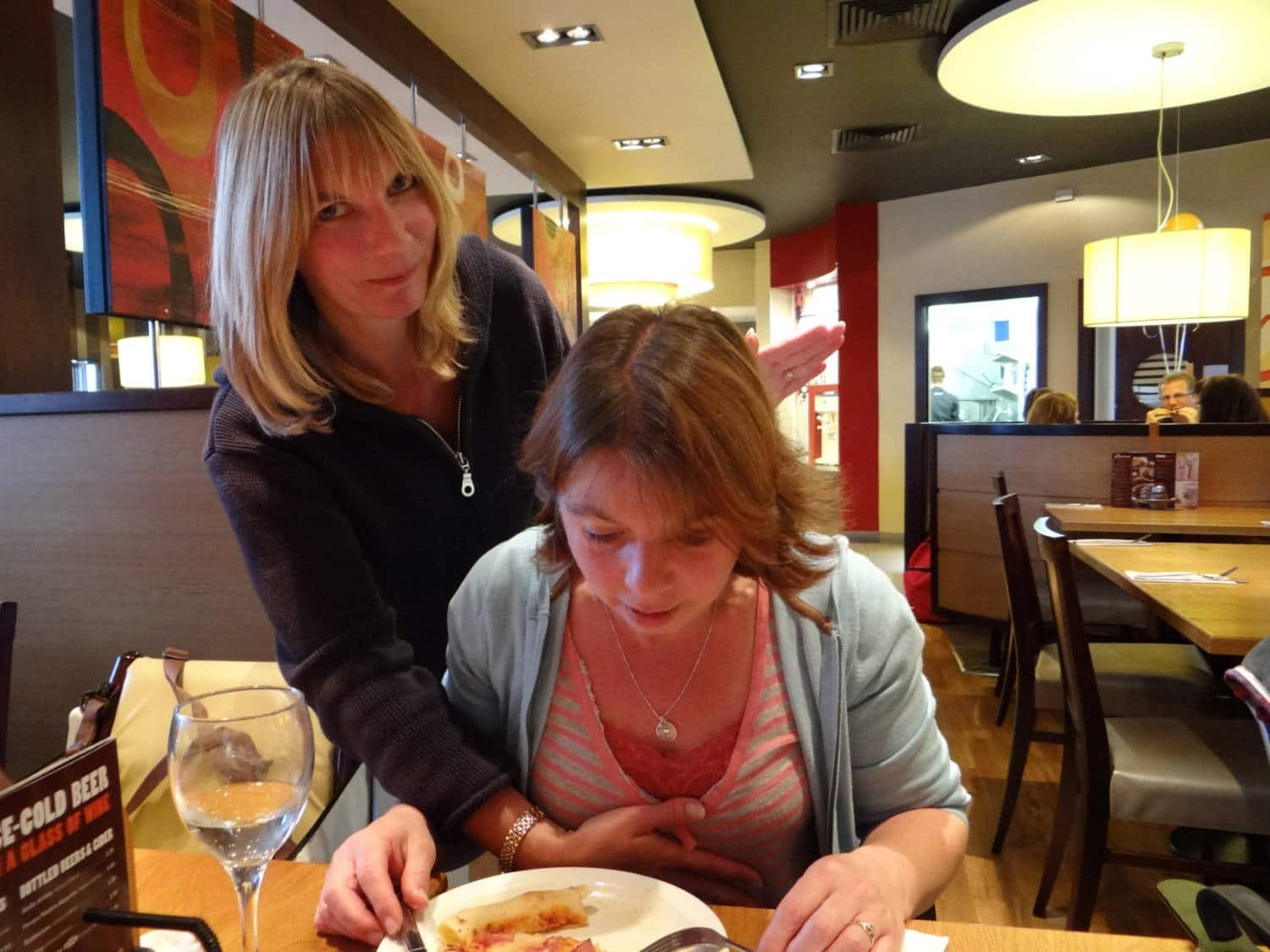
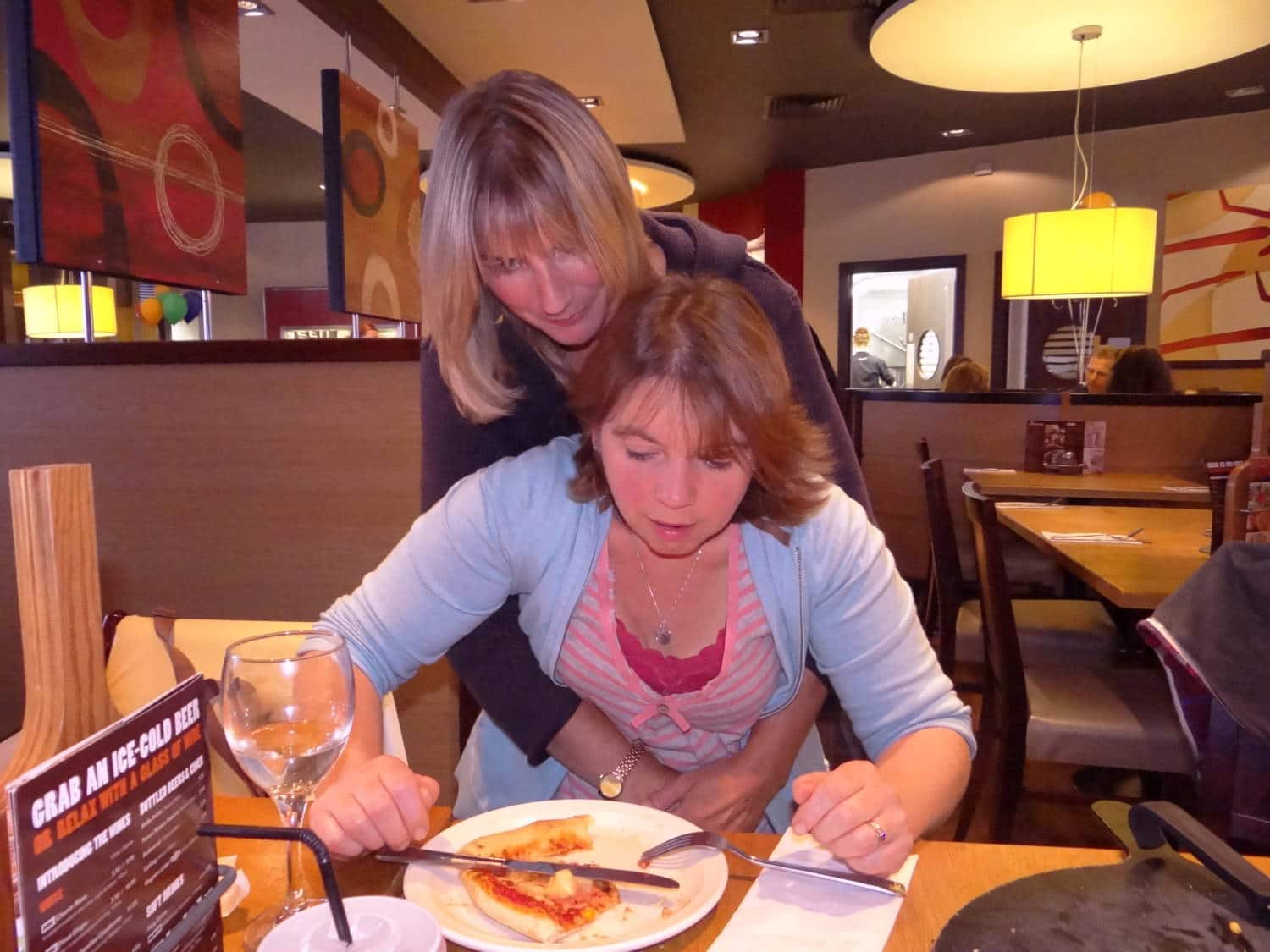
Abdominal Thrusts:
Stand behind them and place one hand in a fist under their rib cage. Use the other hand to pull up and under to dislodge the obstruction. You are using a J-shaped motion to pull up and under their rib cage. Perform abdominal thrusts up to 5 times, checking each time to see if the obstruction has cleared. Anyone who has received abdominal thrusts must be seen by a doctor.
If the person is still choking, call 999 (or 112) and alternate five back blows and five abdominal thrusts until emergency help arrives. If at any point they become unconscious, commence CPR.
What to do when a child is choking
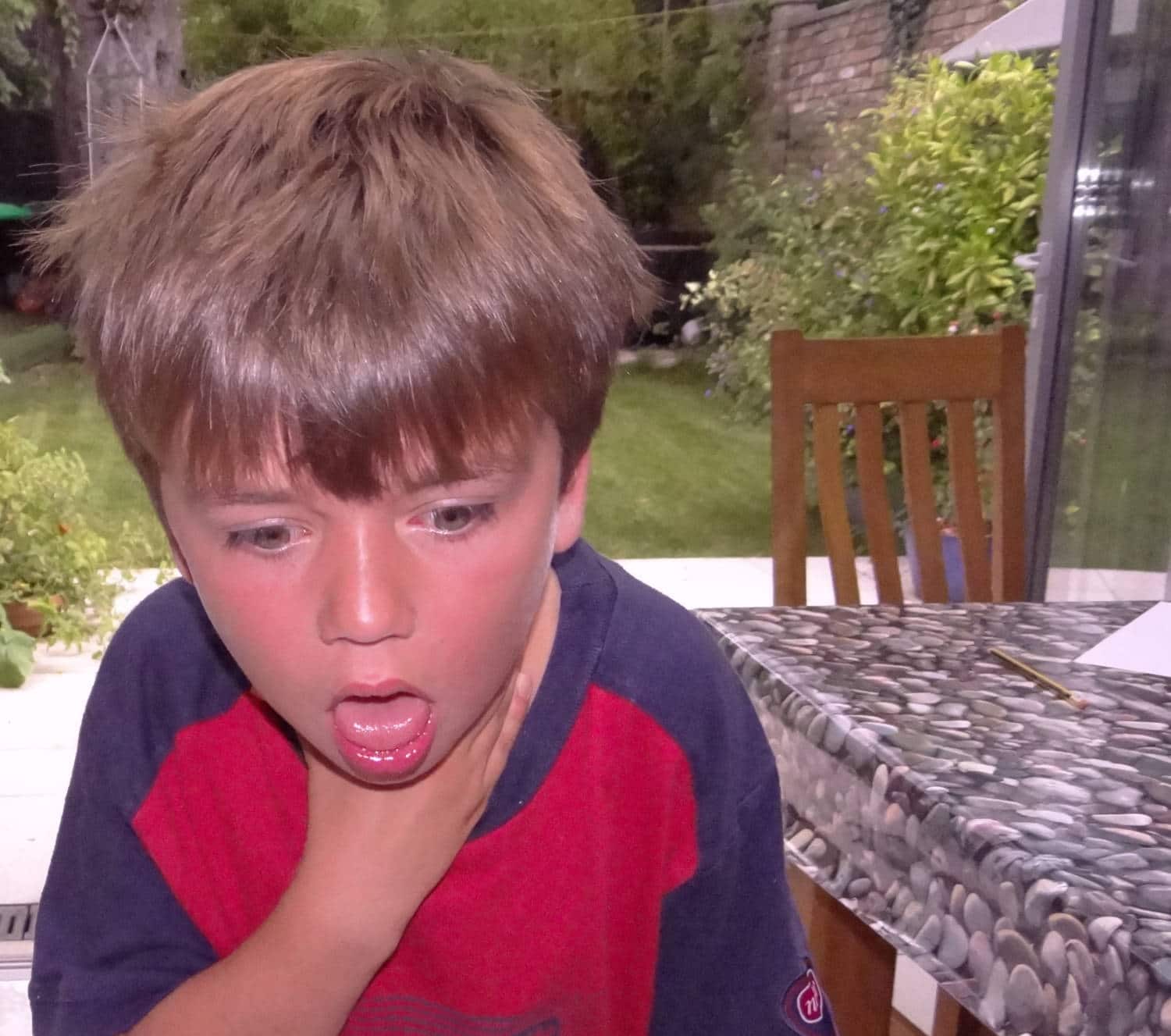
Babies and young children can choke on anything that can fit through a loo roll. To prevent choking: keep small objects out of reach, cut up food into very small pieces and supervise children while they’re eating.
Signs of choking:
Unable to speak or cry, clutching their throat, struggling to breath
How to help a choking child over 1 year:
If a child shows signs of choking, stay calm and ask them to cough to try and remove the obstruction themsleves.
If they are unable to cough:
Bend the child forward, supporting them on their chest with one hand with the other hand; use the flat of your hand to give a sharp back blow between the shoulder blades.

Check to see if the blockage has cleared before giving another blow – give up to 5 back blows checking each time to see if the blockage has cleared
If the back blows haven’t helped get an ambulance on the way
If the blockage hasn’t cleared after five blows, the next stage is to do an abdominal thrust/Heimlich manoeuvre:
Stand behind the child and place one hand in a fist under their rib cage. Use the other hand to pull up and under in a J shaped motion, to dislodge the obstruction.
- Perform abdominal thrusts up to 5 times, checking each time to see if the obstruction has cleared.
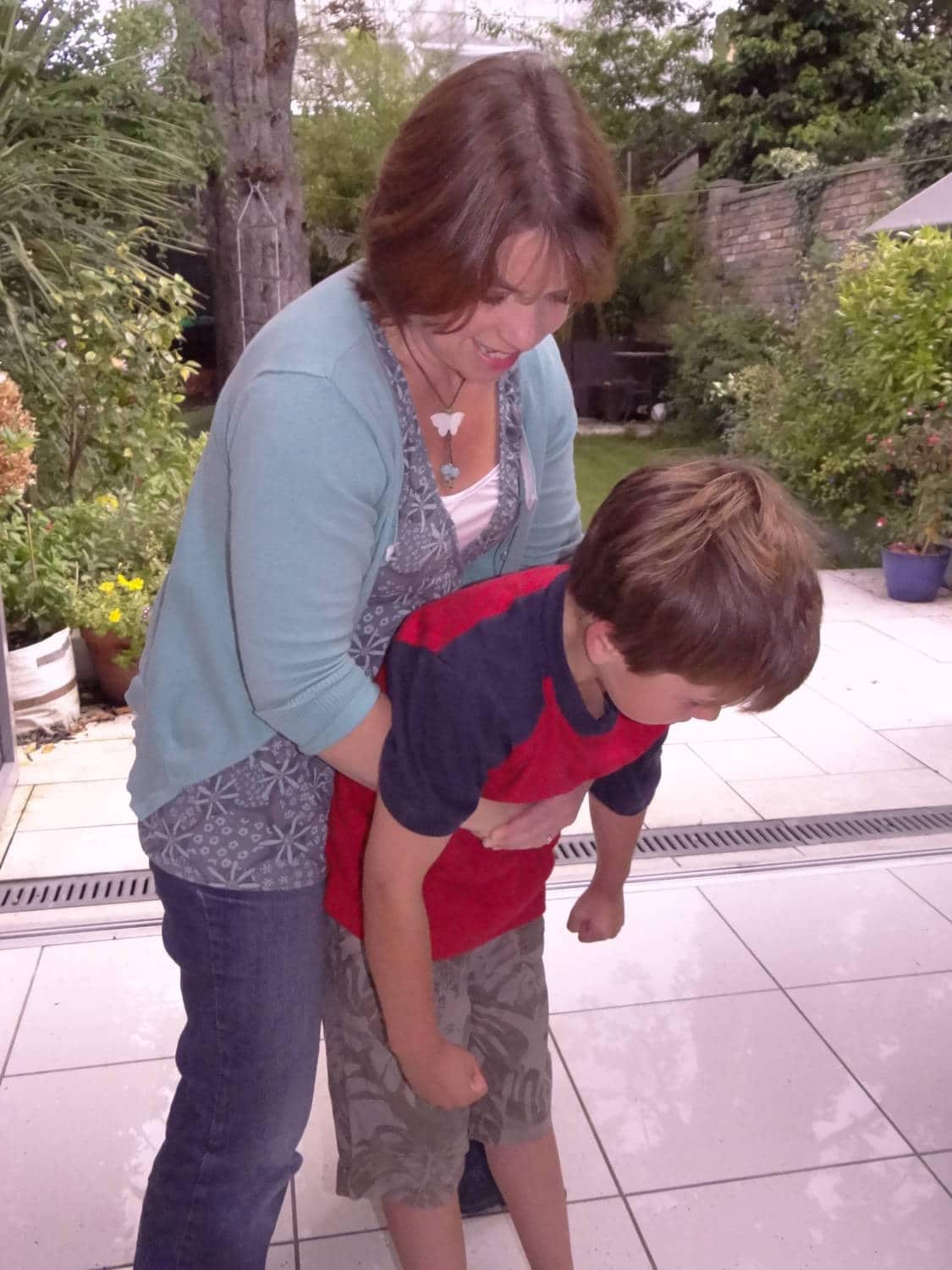
Anyone who has received abdominal thrusts must be seen by a doctor.
If the child is still choking, call 999 (or 112) and alternate five back blows and five abdominal thrusts until emergency help arrives. If at any point the child becomes unconscious, commence CPR.

What to do if a Baby is Choking
- Look in the baby’s mouth. If there is something obvious, remove it with your fingers.
Never be tempted to put your fingers down a baby’s throat or finger sweep the mouth. This can make matters worse by pushing the obstruction further down or causing swelling.
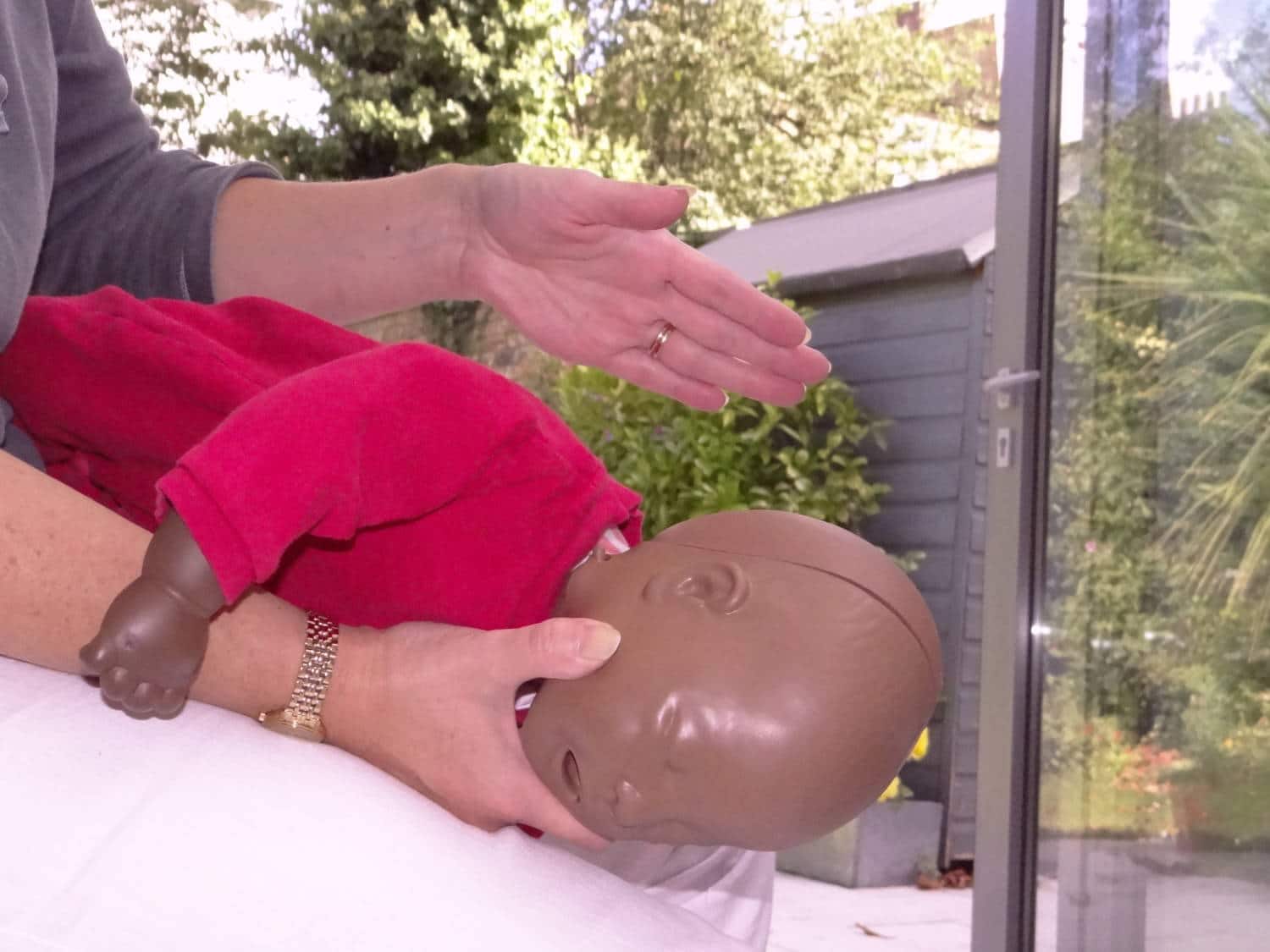
- Lie the baby across your forearm and supported across your legs, supporting them under the chin. Use the flat of your hand to give a firm back blow between the shoulder blades.
- Give up to fiveback blows and checkbetween each one to see if the blockage has cleared.
If they are still choking, call the emergency services and start chest thrusts straight away.
- For a baby under a year give up to 5 firm chest thrusts, holding them with their head lower than their stomach and checking to see if the obstruction has cleared.
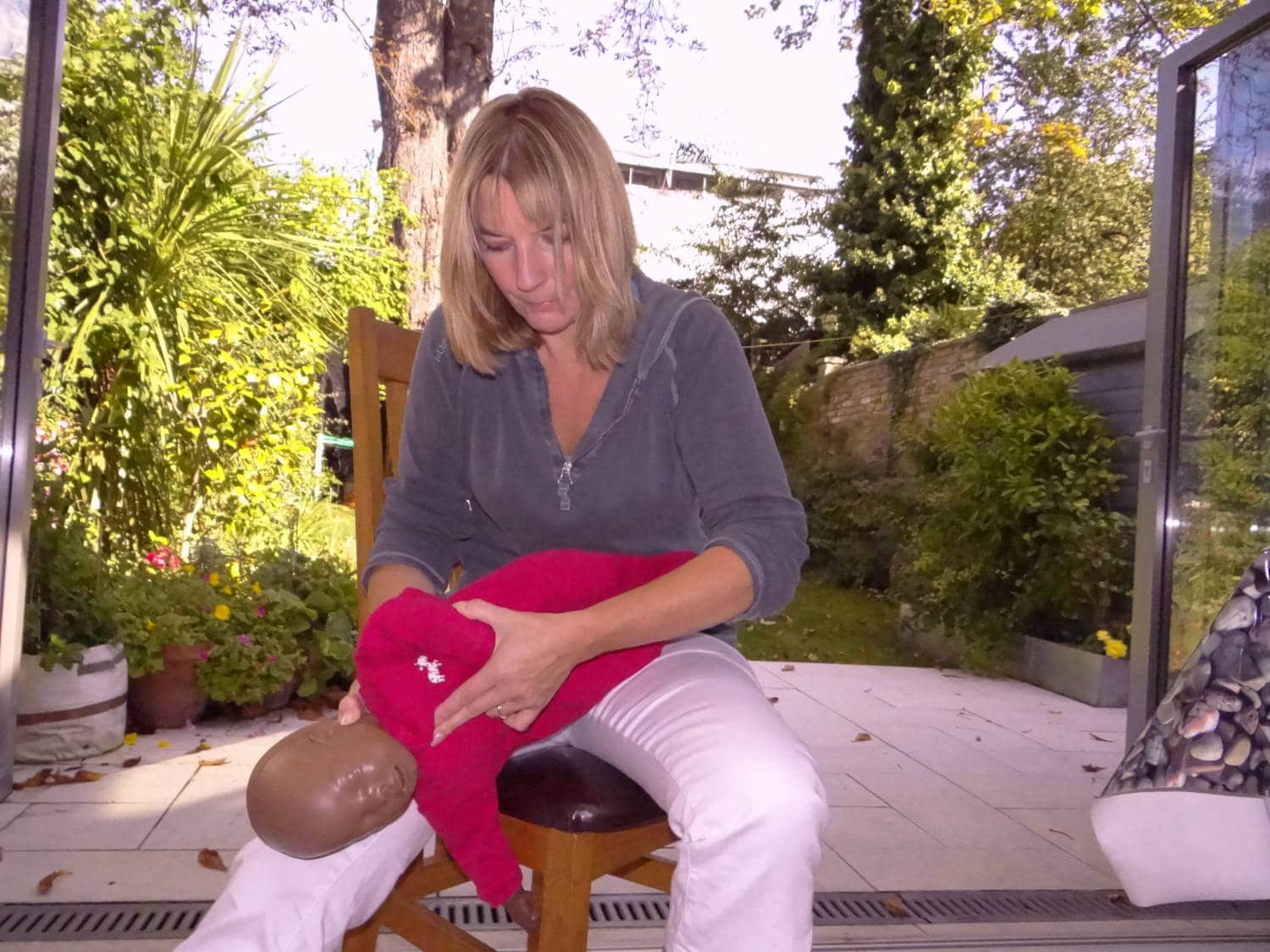
For more information on how to prevent choking and how to give chest thrusts click here https://firstaidforlife.org.uk/baby-choking/
https://onlinefirstaid.com/child-choking-2/
Or click here to watch our video
CPR – Cardio, Pulmonary Resuscitation
If someone is unconscious and not breathing it is vital that you open their airway and commence CPR as quickly as possible. If there is a defibrillator (AED) available, you should use that and call and ambulance as a matter of urgency too.
If the casualty is unconscious, but still breathing, they must be put into the recovery position to ensure their airway remains clear and monitored closely to make sure they continue to breathe. Click here to learn how to put someone into the recovery position.
Adult
If an adult has a Cardiac Arrest they are likely to have residual oxygenated blood in their system which can sustain them for 3 or 4 minutes whilst someone is pushing on their chest to pump that blood round their body.
After this time, or after about 30 compressions, they will start to run out of oxygenated blood.
- Place the heel of your hand on the centre of the person’s chest, then place the other hand on top and press down by 5-6cm at a steady rate of 100 to 120 compressions per minute.
- After every 30 chest compressions, give two rescue breaths.
Child
Children are unable to retain oxygen in their system as efficiently as adults (and they are also more likely to have experienced a respiratory problem leading to their collapse) and therefore for children it is advised to start with 5 rescue breaths – tilt their head and lift their chin to open their airway and then breathe into them sufficiently for their chest to rise.
This should then be followed by 30 chest compressions, pushing down on the chest by about a third and pushing hard and fast.
Get an ambulance on the way and then continue: 2 breaths: 30 compressions….
Click to read full article on adult and child CPR and for information on why it is so important that you give breaths and well as compressions https://firstaidforlife.org.uk/breaths-cpr-important/
What to do if your baby is unconscious and not breathing
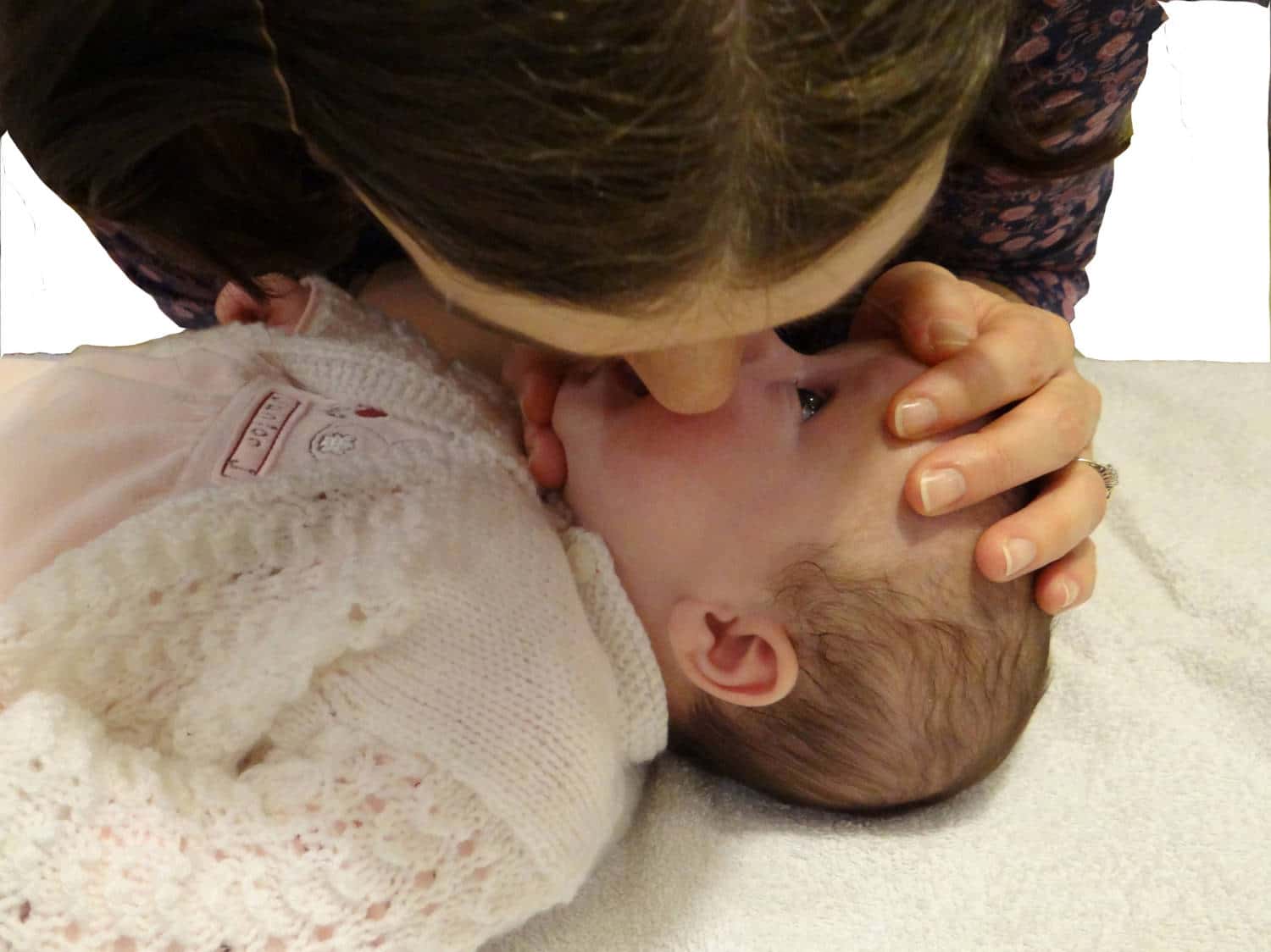
As with the adult and child advice; first check Danger, Response, open their Airway and check for Breathing – If you think they are not breathing properly (less than 2 breaths in a 10 second period), start CPR (Cardio Pulmonary Resuscitation)
Tilt the head and lift the chin to horizontal and give up to 5 rescue breaths
Carefully tilt the head and lift the chin to roughly a horizontal position to take the tongue off the back of the airway then give 5 rescue breaths to re-oxygenate them. Babies and children are much more likely to have had a breathing problem first resulting in a respiratory arrest – their heart will stop later.
- Seal your mouth around their mouth and nose (if you can fit your mouth over both) and blow into them gently with a puff of your cheeks (their lungs are about the size of a teabag – so don’t breathe too hard).
- If they start to gurgle when you breathe into them, briefly turn them onto their side and empty any vomit from their mouth, before continuing with the breaths.

Push down by a third of their depth with two thumbs or fingers
Push hard and fast on the centre of their chest – roughly between the nipples at a rate of about 120 beats per minute – roughly 2 per second
After about 30 compressions…you will need to give them 2 more breaths and then continue with the compressions again. 30:2:30:2:30:2…
Keep going
When you push on the chest – you are being the heart
When you breathe into them – you are being the lungs
If you are on your own, you should perform 1 minute’s CPR before phoning for an ambulance (5 breaths, 30:2, 30:2 is about a minute). Continue until the paramedics arrive.
For full article https://firstaidforlife.org.uk/what-to-do-if-your-baby-is-unconscious-and-not-breathing/
How to help someone experiencing a seizure

Help for a generalised seizure or febrile convulsion
- Make sure they are safe, ease them to the ground if they are on a chair.
- Protect their head without restraining them.
- Loosen any tight clothes.
- Remove any objects against which they could hurt themselves.
- Ask bystanders to move away and maintain the casualty’s dignity.
- If possible, observe what is happening during the seizure as this can be useful for future diagnosis.
- Once the seizure has stopped, check the airway and breathing and place in the recovery position if they remain unresponsive.
- Stay with them and talk to them reassuringly throughout the seizure
Phone for an ambulance:
- if it is their first seizure,
- if the seizure lasts for more 5 minutes
- If they have another seizure immediately after the first one
- If they are injured
- If they are known to have seizures and this one is different
- If you are worried at all
- If unresponsive for more than 5 minutes after the seizure
Never put your fingers or anything in their mouth to try and prevent them biting their tongue – as this will cause serious injury
Do not try and move them unless they are in immediate danger
Do not restrain their movements whilst they are fitting
Do not give them anything at all to eat and drink until fully recovered
Never try and ‘bring them round’
Click to read full article on febrile convulsions
https://firstaidforlife.org.uk/febrile-convulsions-seizure/
Click to read full article on seizures
https://firstaidforlife.org.uk/fitting-seizures-and-convulsions/
Burns
How to Treat a Burn
Burns can be painful and dangerous for anyone however they can be particularly serious for small children and babies. Young children are usually slower to move away from danger as they haven’t as yet developed reflexes to move away from something hot. Their skin is up to 15 times thinner than that of an adult. Damage tends to be more severe because they have a smaller body surface area which means the burn often covers a larger proportion of their body.
Knowing what to do can radically reduce the amount of pain and scarring experienced and can mean a full recovery without even needing to be admitted.
- Extremely carefully, remove loose clothing covering the burn.
Do not take clothes off if there is any risk the skin has stuck to them or if the skin has blistered.
- Put the affected area under cool running water for a full 20 minutes (ideally longer). Remember you are cooling the burn and not the casualty, so try and keep the water running over just the burnt area.
- Keep the rest of the casualty as warm and dry as possible and watch for any signs of shock.
- Phone an ambulance, particularly if a large area is affected, or if the skin is broken or blistered. Keep the area under the water while you wait for the ambulance to arrive.
A burn is measured using the size of your hand, which is roughly equivalent to 1% of your body. Therefore, a burn measuring just the size of a 50p piece or a postage stamp can be very serious for a baby or small child. Burns to the hands, face, feet, genitals, airways, or a burn that extends all the way round a limb are particularly serious.
Never:
- Remove anything that has stuck to a burn
- Touch a burn
- Burst blisters
- Apply any creams, lotions or fats
- Apply tight dressings, tapes or use anything fluffy
Always get burns assessed by a health professional.
Head injury
What to Look For
Adult:
Initial symptoms of concussion – in sport especially, the most common symptoms that you may see following a head injury are as follows: Headache, confusion, blurred vision, nausea, difficulty concentrating, fatigue, drowsiness, dizziness, feeling in a fog, memory impairment.
Most important advice following a head injury –
- Don’t make things worse – important to take seriously and rest
- Do not risk further injury
- Rest your brain = lots of sleep, avoid reading, screens and sports for at least 24 hours / 48 hours for child
Click to read when to play on in sport following a head injury https://firstaidforlife.org.uk/head-injury-advice-play-on/
Baby and Child

If you would like a copy of this poster, please email emma@firstaidforlife.org.uk
Call 999 or 112 if a baby or child is injured and they lose consciousness, even momentarily.
Or if they:
- won’t stop crying
- are unable to walk normally
If the child has not lost consciousness, is alert and behaving normally after the head injury:
- Reassure the child and remain calm.
- Control any bleeding with direct pressure using a clean, non-fluffy cloth.
- Apply a wrapped ice pack or instant cold pack to the injured area for 10 minutes (this will reduce bruising but has no effect on the severity of any internal head injury).
- Observe the child carefully for the next 24 hours. If you notice any worrying signs (see below), get medical help immediately.
- If the incident has occurred close to bedtime or naptime and your child falls asleep soon afterwards, check in continually to look for anything unusual.
Worrying signs
- Twitching limbs
- Disturbances in colour
- Disturbance of breathing.
It’s fine for your child to go to sleep following a minor head injury, however do not confuse falling asleep with losing consciousness!
Bleeding
If someone is bleeding the priority is to stop the blood coming out! It is never a priority to wash an injury – it will be cleaned in hospital.
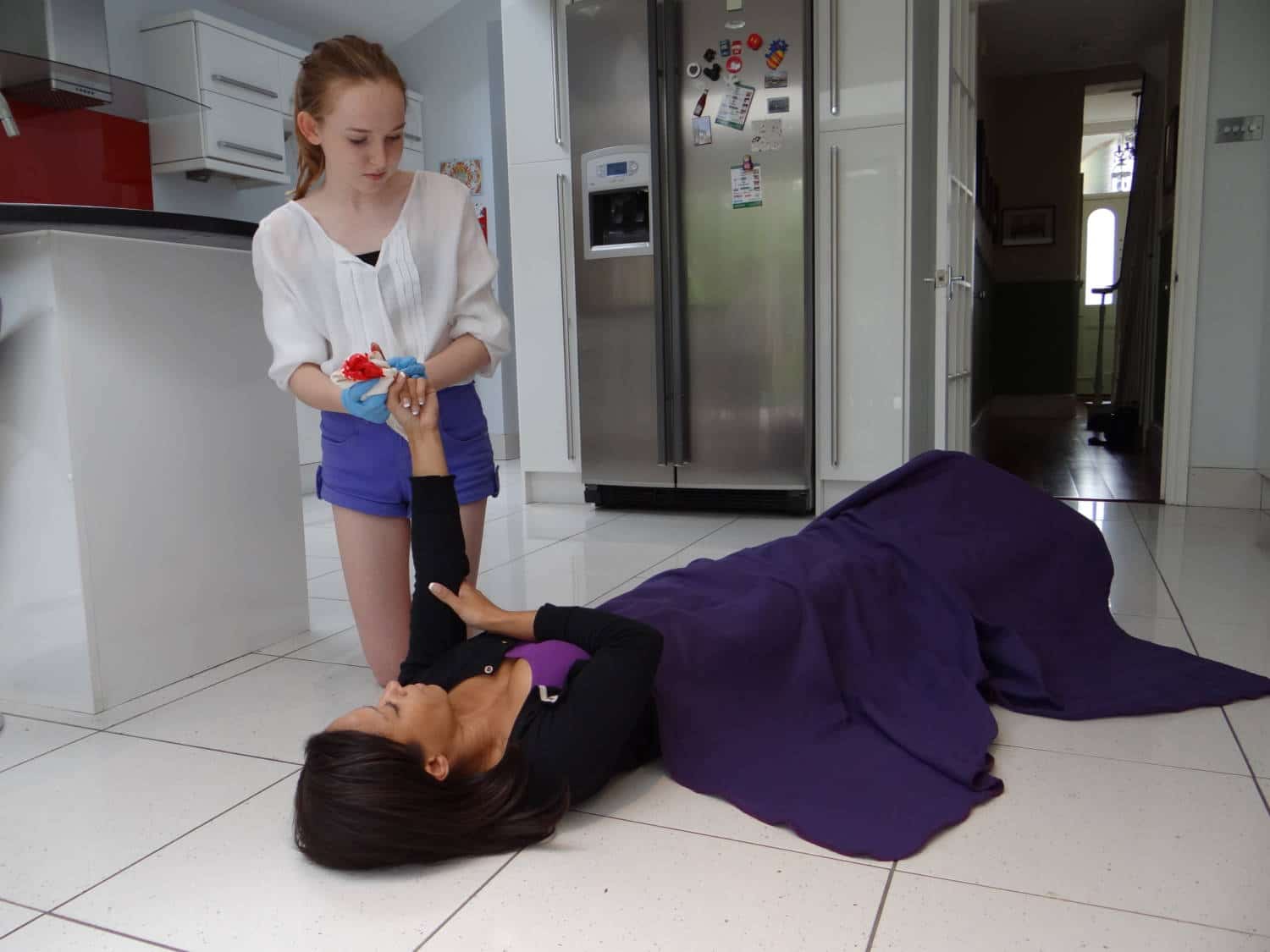
Keep them warm and get emergency help.
If the person is pale, cold, clammy and showing signs of shock, or if there is a lot of blood – help their circulation by lying them down and raising their legs.
Apply direct pressure to control the bleeding and elevating the wound can help to slow the flow of blood.
Click to read full article on bleeding including information on the signs and symptoms shock and how to treat it https://firstaidforlife.org.uk/severe-bleeding-and-clinical-shock/
It is strongly advised that parents attend a practical or online First Aid course to understand what to do in a medical emergency.
About us
Written by Emma Hammett
First Aid for Life provide award-winning first aid training tailored to your needs – Please visit our site and learn more about our practical and online courses. It is vital to keep your skills current and refreshed.
We strongly advise that you attend a fully regulated Practical or Online First Aid course to understand what to do in a medical emergency. Please visit https://firstaidforlife.org.uk or call 0208 675 4036 for more information about our courses.
First Aid for Life is a multi-award-winning, fully regulated first aid training provider. Our trainers are highly experienced medical, health and emergency services professionals who will tailor the training to your needs. Courses for groups or individuals at our venue or yours.
Online First Aid provides this information for guidance only. It is not in any way a substitute for medical advice. First Aid for Life is not responsible or liable for any diagnosis made, or actions taken based on this information.


0 Comments